
Grieving the Body You Had: Adjustment After Diagnosis | Georgia Telehealth Therapy
In this episode
Something people with chronic illness say a lot: "I don't get to be sad about this. Other people have it worse."
You do get to be sad about it. Grieving your old body is not self-pity. It's grief, and it behaves like grief — it comes in waves, it ambushes you in the grocery store, and it doesn't re
Generated from Coping & Healing Counseling: Accessible Telehealth for Georgia
Transcript
Imagine grieving for someone who died. But like no one else can see the casket. Right, which is just a wild concept to start with. It really is. No one brings you casseroles to help you through those first few weeks, you know, no one sends flowers to your house. Because they don't even realize a loss happened. Exactly. And nobody gives you time off work. Now imagine the person in that casket um is you. Wow. Welcome to the deep dive. We are talking about something today that affects millions of people, yet it remains I mean almost entirely invisible to the outside world. Completely invisible. Yeah. And we have our hands on a really fascinating set of clinical
notes and service details from Coping and Healing Counseling or CHC. Our mission today for you listening is to untangle this incredibly heavy, frequently misunderstood intersection of chronic illness, mental health, and the sheer logistical nightmare of trying to get care when your own body is fighting against you. It is such a vital space for us to explore with you today because if you look at the standard medical model, well, it assumes a neat orderly world. We treat the physical body in one building under fluorescent lights, and we treat the mind in a completely different building across town. Like they're totally unrelated. Exactly. The system just assumes they don't talk to each other. But they absolutely do.
The reality of a physical illness and the reality of mental health, they violently collide on a daily basis for patients. And according to these clinical notes we're looking at, that collision creates a very specific emotional starting point that almost every chronic illness patient faces. It's this massive, almost reflexive denial of their own grief. Yeah, that denial is so common. The notes point out a phrase that clinicians hear like all the time. I don't get to be sad about this. Other people have it worse. That phrase is just a heartbreaking defense mechanism. It's a product of how society views illness, you know. Right. Society understands acute injury. If you break your leg, you get a bright
white plaster cast, people sign it with Sharpies, and they hold the door open for you. Because there's a visible marker. Exactly. A visible marker of your struggle. Mhm. But with chronic illness, that visible marker is often just missing. Which leads the patient to minimize their own pain. But the source material is very direct about this. It validates a critical reality. Grieving your old body, grieving the energy you used to have, is not self-pity. No. It is actual legitimate grief. Okay, let's unpack this, because I think that word grief is usually reserved exclusively for when someone passes away. Right. We associate it with a cemetery. Yeah, a cemetery or a funeral. Mhm. But mourning your pre-illness
body, mourning the physical capabilities you used to just take for granted, like just being able to digest a normal meal, or go for a spontaneous walk, that is exactly what I was talking about with that invisible funeral. It's the perfect analogy. You lost your past physical self, and it has to be incredibly isolating when society is essentially demanding you act like nothing died. What's fascinating here is how the clinical notes describe the exact mechanics of this experience. This isn't just, you know, a poetic metaphor you're using. It literally behaves neurologically like traditional mourning. The source points out that this grief comes in unpredictable physical waves. It ambushes you in the grocery store. The grocery store?
Yeah, like you could just be reaching for a jar of pasta sauce, and you realize you don't have the grip strength to open it anymore, or your joints are suddenly burning. Oh, man. In that mundane moment in aisle four, you are suddenly overwhelmed by the reality of your physical limitations. And cruelly, the notes specify that this grief doesn't just resolve itself simply because you are managing your medical treatment well. Wait, really? So, you could be doing everything right, taking the pills on time, doing the physical therapy, following the diet, and still get hit by the grief truck. Absolutely. You can be the textbook good patient and still be drowning because well, the medication might stabilize
the disease, but it doesn't give you back the 5 years you lost to the diagnosis. Right. Or the career trajectory you had to just abandon. So that invisible funeral never really ends. The casket is just always in the room with you. And once we understand that this invisible grief is constantly ambushing the patient in these everyday moments, um it perfectly explains the next major point the clinical notes highlight. Yeah. It explains the surprising, sometimes alarming ways this grief manifests in a patient's daily behavior. Because the emotional cost always translates into a behavioral cost. at the section detailing this behavioral cost right now, and it is intense. The source talks about dread specifically. A profound dread
that starts three full days before a regular medical appointment. Three days? Yeah. It talks about patients actually canceling the appointments they know they desperately need because the anxiety has gotten bigger than the appointment itself. Yeah. And it also mentions patients actively pulling away from their friends, particularly after hearing one too many people say, "But you look fine." Which, to tie it back to your analogy, is the ultimate invalidation of that invisible funeral. But I have to stop and push back on the medical appointment thing for a second cuz I want to make sure we're getting this right for the listener. If you were battling a serious, degenerative, chronic condition, your doctor is your lifeline. Your
specialist is the person keeping you out of the hospital. Sure. Why on earth would someone cancel the exact medical appointment they desperately need for their literal survival? Mhm. From the outside, it just seems completely counterintuitive. It sounds like they're just sabotaging their own care. I hear that. But, if we connect this to the bigger picture, it stops looking like sabotage and starts looking like a perfectly logical, albeit desperate, attempt by the nervous system to regain control. Okay. Think about what a medical appointment represents for someone who has spent years navigating a chronic illness. Yeah. It is not just a checkup. What is it then? It is a blinding spotlight on their trauma. It's a place
where they have historically been poked, prodded, dismissed, or told their pain is something they just have to live with. Oh, wow. So, it's a learned response. Precisely. Their nervous system has logged hospitals and waiting rooms as sites of emotional danger. So, when an appointment is coming up, the anxiety just grows larger than the logical need for the appointment. That makes a lot of sense. The dread that starts 3 days prior is the body's fight or flight system screaming, "I cannot handle another reminder of what I've lost. I cannot handle another doctor looking at my chart and shrugging." So, they cancel. Man. It isn't laziness or self-sabotage. It's trauma avoidance. It is the human brain trying
to protect itself from psychological pain, even at the expense of physical health. Wow. Okay. When you frame it as trauma avoidance, it makes complete sense. It's not about not wanting to get better. It's about not wanting to be retraumatized by the very system that's supposed to help you. Exactly. And then, as the source notes, you layer the social aspect on top of that medical trauma. You have patients withdrawing from their own support networks because of toxic positivity. Right. The "But you look fine" comments. Yes. When a friend says, "But you look fine" or "You just need to get out more." They probably think they are being encouraging. But to the patient whose body is screaming
in pain, it translates as, "Your pain isn't real" or "You are exaggerating your struggle." Right. Because if you look fine, then the inability to go out for dinner must be a character flaw, not a symptom. Exactly. Which just compounds the isolation. They withdraw from their doctors to avoid medical trauma, and they withdraw from their friends to avoid toxic positivity. So, they're completely trapped. They end up entirely alone with this massive, exhausting disconnect between looking fine on the outside and feeling terrible internally. Which leads us directly into what looks like the most complex clinical challenge outlined in these notes. Because if a patient is dealing with all of this, the trauma avoidance, the isolation, the invisible
grief, how in the world do doctors and therapists actually separate the physical illness from the mental toll? Like where does the body end and the mind begin? It is a notoriously tangled web and it's where standard medical care often fails. The source material outlines this dilemma perfectly by listing symptoms like extreme exhaustion, sudden appetite changes, and severe sleep disturbances. Okay, if I hear those three, exhaustion, appetite changes, bad sleep, I immediately think of depression. And in a vacuum, you would be right. Those are classic textbook symptoms of clinical depression. But the notes emphasize a massive complication here. Those exact same symptoms also belong to almost every major autoimmune and chronic condition out there. Wow, though.
Lupus exhaustion, Crohn's disease causes appetite changes, rheumatoid arthritis ruins your sleep. Here's where it gets really interesting because you are essentially looking at a single symptom that has two completely different origin stories. Yes. It's like taking your car to the mechanic because a red warning light is flashing on your dashboard. That flashing light could mean your transmission is physically shot, which would be the physical illness. Or it could mean the car's internal computer is glitching out and sending a panic signal, which is the depression. Right. But when you have a chronic illness, it's like both things are happening at the exact same time. The transmission is broken and either computer is glitching. If a doctor
or a therapist just guesses which one is causing the exhaustion today, the guesswork isn't just unhelpful, it's genuinely dangerous. That is a brilliant way to conceptualize the diagnostic danger. Because if a doctor decides the exhaustion is just a computer glitch and prescribes an antidepressant, but the transmission is actually failing because of a lupus flare-up, the patient's physical health deteriorates rapidly. Yeah, that's scary. The CHC notes are very firm on this point. Untangling this overlap takes a highly specialized licensed clinician who actually talks directly to your medical team instead of just guessing around it. You literally need the mechanic and the software engineer looking under the hood together. No silos. They have to share the blueprints.
Exactly. And this is why the source highlights CHC's specific structural approach as a model for how this should be done. They utilize a diverse, culturally competent team of over 15 licensed therapists. And the notes specifically list LCSWs, LPCs, and LMFTs. Okay, let's translate that alphabet soup for a second. What are those? Fair point. We're talking about a whole task force of licensed clinical social workers, licensed professional counselors, and licensed marriage and family therapists. Their job isn't just to sit in a room, nod, and say, "How does that make you feel?" Their job is to actively untangle these overlapping symptoms by operating in tandem with the patient's medical doctors. So, they actually talk to the doctors.
Yes. It is a multidisciplinary approach. Because without that level of communication, treating a chronic illness patient is just blindly throwing darts at a board of symptoms. So, assuming this task force successfully untangles the web, they figure out, okay, 60% of this exhaustion is the physical disease, and 40% of this exhaustion is clinical depression. How do they actually treat the mental side without pretending they have some magic wand to cure the physical disease? Right. The notes are remarkably blunt about this. They say, "Therapy won't treat your lupus, it won't cure your Crohn's, and it won't fix your rheumatoid arthritis." So, what does this all mean? If the therapist can't cure the physical root of the suffering,
what is the actual finish line for the patient here? The finish line shifts entirely. It moves from curing the disease to carrying the weight of the disease. Carrying the weight? Yes. The notes explain that while therapy cannot alter the cellular reality of the illness, it fundamentally changes how the patient carries that illness through their life. And the specific psychological mechanism they use for this is something called ACT. ACT? Yes, acceptance and commitment therapy. It is a profound framework. The source details how ACT is used to help the patient build a life that fits the body they have now, rather than putting their life on hold for the body they are waiting to get back. Wait,
I have to jump in here. Acceptance. I can hear someone with lupus or Crohn's listening to this right now and saying, "You want me to just accept that my body is attacking itself? Isn't that just giving up?" Yeah. How do they separate acceptance from surrender? That is the most common and honestly most valid pushback to this therapy, and it's crucial to clarify. Acceptance in the context of ACT does not mean approval. It doesn't mean you like the illness, and it certainly doesn't mean you stop seeking medical treatment. Acceptance means dropping the exhausting struggle against the reality of the present moment. Nice. Surrender is saying, "My life is over because I have this pain." Acceptance is
saying, "I have this pain, it is awful, and I am still going to figure out how to live a meaningful life alongside it." So, it's stopping the state of suspended animation. Mhm. Because so many people with chronic illness put their entire lives on pause. They think, you know, "I'll start dating again when my flare-up stops." Or, "I'll take a vacation when my energy's back to normal." Exactly. That is the invisible funeral, again refusing to leave the graveside waiting for the person to wake up. ACT challenges that waiting game. It says, "We are going to commit to finding meaning within these new parameters." So, what does that look like practically? The therapist might say, "Instead of
saying I'll travel when I'm cured, let's figure out how to take a micro-vacation 20 minutes from your house that perfectly accommodates a sudden flare-up. It's highly practical." That's smart. The notes emphasize clinical goals like pacing, which means teaching the patient to respect their actual energy limits rather than pushing through the pain to please others and then crashing for a week. And the notes also mention treating sleep. Which feels so fundamental, but I imagine it gets overlooked. Constantly overlooked. But think about the mechanics of sleep and pain. Huh. If you aren't sleeping because your joints are burning, your nervous system becomes hyper-vigilant. Right. of sleep biologically lowers your pain threshold, meaning the exact same physical stimulus
literally feels more painful the next day. Oh, man. Which causes more anxiety, which prevents you from sleeping the next night. It is a neurological doom loop. ACT therapists work to break that loop, often using cognitive behavioral techniques for insomnia so the patient can actually get the rest their body desperately needs to fight the inflammation. It's treating the collateral damage of the disease. Yeah. But um there is a brutal irony here that we have yet to talk about. We are discussing this life-changing mental health treatment, acceptance and commitment therapy, untangling symptoms, pacing, breaking the sleep doom loop. It sounds incredible. It really is. But implementing any of this requires the patient to actually consistently attend therapy.
And as we discussed earlier, just getting to an appointment is an enormous sometimes impossible hurdle for someone whose physical body is actively failing them. Yeah. On a bad day, driving across town, finding parking, and sitting upright in a waiting room is a physical impossibility. You're entirely right. The friction of acquiring the care becomes an insurmountable barrier to the care itself. The patient is penalized for the very symptoms they're trying to get treated. But that brings us to the logistical solution in the CHC notes, which honestly feels like the missing puzzle piece for this whole landscape. Yeah. Now, just to be clear for you listening, we aren't endorsing this specific clinic, we're just looking at their
notes as a blueprint for how modern care can actually work to solve this friction. Absolutely. Coping and Healing Counseling operates a 100% telehealth model. It's entirely IPA compliant, and they serve all 159 counties in Georgia. They offer everything from individual, couples, and family therapy to teen therapy for ages 13 and up, plus life coaching. A really comprehensive setup. Yeah, and their specialties cover all the collateral damage we mentioned: anxiety, depression, trauma, PTSD, grief. But the key phrase in the source material that just changes the game is this: On flare days, telehealth means the appointment happens from your couch. No parking deck, no waiting room. It fundamentally removes the executive function tax and the physical barrier
to entry. Right, it's the equivalent of having the emergency room securely teleported into your living room on the exact days you physically cannot walk out your front door. That's a great way to put it. If you are having a flare day, you don't have to cancel that needed appointment out of dread or exhaustion, you literally just have to open a laptop. You can be in your pajamas, wrapped in a heating pad, lying flat on your back, and still get the psychological care you need to survive that day. And removing that physical friction is revolutionary. But this raises an important question about a completely different kind of friction, financial accessibility. Because a beautifully designed telehealth model
is completely useless if the patient can't afford to log on. Very true. Chronic illness usually comes with chronic, crushing medical bills. Yeah, the financial toxicity of being sick in this country is a whole separate disease. Exactly. But the source material provides the exact numbers for this model, and they are critical to the blueprint. For patients on Medicaid, there is a $0 copay. Zero, [snorts] which is huge, because that removes the final psychological barrier. Yeah. When you have no money and you're sick, spending even $20 on yourself feels like a massive risk. Precisely. It alleviates that compound stress. And for most commercial plans, the notes list Aetna, Cigna, BCBS, UHC, and Humana, the cost ranges from
just $10 to $40 a session. That's really reasonable. It is a radically accessible price point for specialized multidisciplinary care that talks to your doctors. If you are navigating this right now, or if you're helping a loved one try to find their way through this murky landscape, the notes provide their contact information. Let's hear it. If you're taking notes on this, you can look them up at sheetsheektherapy.com, reach out via email at support@sheetsheektherapy.com, or give them a call at 404-832-0102. It's just genuinely incredible to see a blueprint that looks at the whole board. One that addresses both the physical exhaustion and the financial exhaustion of chronic illness at the same time. It is treating the reality
of the patient's life, not just the clinical theory of their disease. We've covered some incredibly heavy, but deeply important ground today. For you listening, we've walked through this entire journey based on the realities in these clinical notes. We started by validating that grieving a changed body is not self-pity. It is a necessary, neurologically real process. Yes. We look at how the invisible nature of that grief leads to severe behavioral costs, like trauma avoidance with doctors, and isolating from friends due to toxic positivity. We untangled the dangerous overlap between physical symptoms and mental symptoms, and explored why you absolutely need a team that communicates to figure out which warning light is actually flashing on your dashboard.
Crucial step. And finally, we saw how modern blueprints like CHC use acceptance and commitment therapy to help patients carry the weight, utilizing telehealth to remove the physical and financial barriers to actually getting that help. It's a comprehensive approach to an overwhelmingly complex reality. And as we wrap up this deep dive, I want to leave you with a final lingering thought built upon that core concept of ACT we discussed. to hear it. The entire goal of acceptance and commitment therapy is to stop putting your life on pause while you wait to get back to your old self or wait for a perfect cure. So, I would ask you to consider your own life right now. In
what ways might you be putting your own happiness on pause? How might you be quietly waiting for a better version of your life, a different set of circumstances, or a different body in a way that is actively keeping you from embracing and finding meaning in the reality you currently have? That is a powerful question to chew on. Because life isn't a clean binary x-ray. It is messy, it is murky, and the only place we can actually live it is right here, right now, in the muddy waters. Thank you for joining us on this deep dive into these clinical notes. Keep digging into the sources, keep questioning the world around you, and we will catch you
on the next one. Take care.
More episodes
What childhood trauma causes avoidance? — Full Episode | Georgia Telehealth Therapy
What childhood trauma causes avoidance?
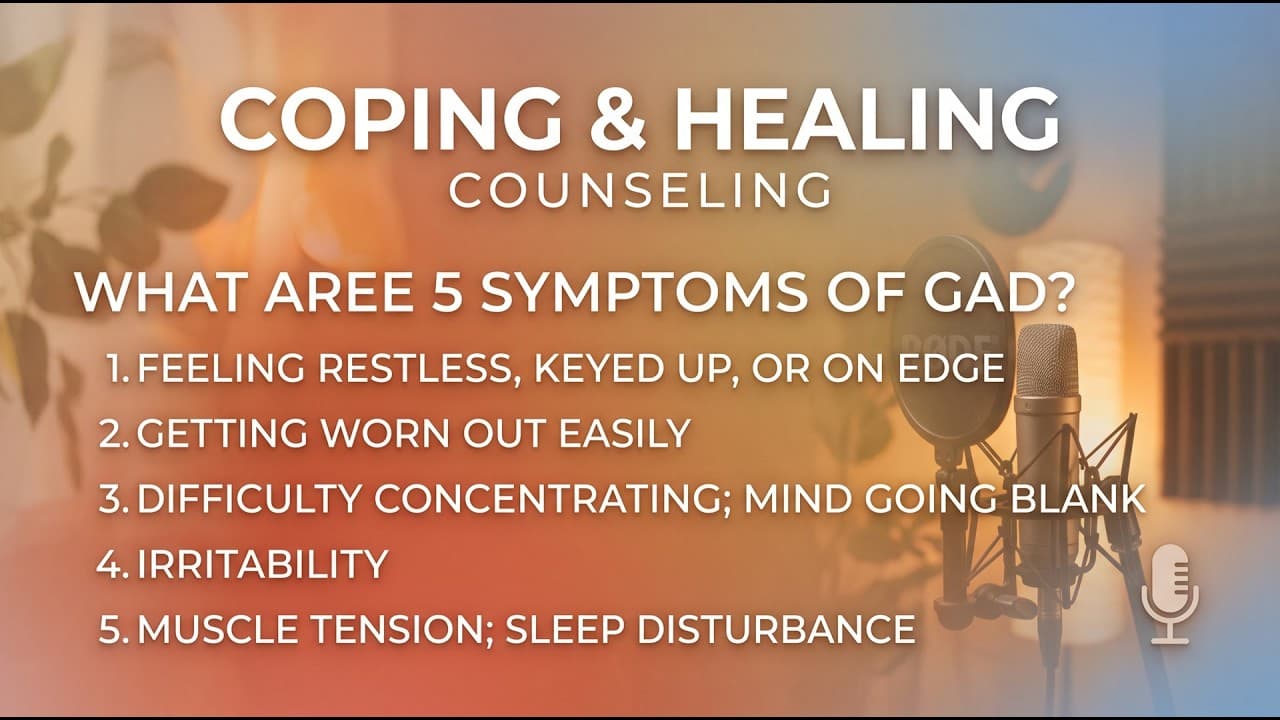
What are 5 symptoms of GAD? — Full Episode | Georgia Telehealth Therapy
What are 5 symptoms of GAD?
What is the main cause of panic disorder? — Full Episode | Georgia Telehealth Therapy
What is the main cause of panic disorder?
If this resonated, we have therapists who can help.
15+ licensed therapists, all 159 Georgia counties, telehealth-only. Medicaid covered at $0 copay.
Book a free consultation