
Autistic Burnout vs. Depression: Why the Difference Matters | Georgia Telehealth Therapy
In this episode
Imagine someone who has held it together for years. Great at work, the friend who remembers birthdays, always 'fine.' Then one winter the energy just goes. Grocery stores become unbearable. Words come slower. A shower feels like a project.
If you're an autistic adult, or you suspect you might be, t
Generated from Coping & Healing Counseling: Accessible Telehealth for Georgia
Transcript
So, I want you to picture someone in your life, okay? Maybe it's um a co-orker you sit next to or maybe it is a friend you've known for years or, you know, maybe it's even you, right? By all outside appearances, this person just has it completely together. I mean, they are excelling at their job. They're the friend who never forgets a birthday, the one organizing all the group dinners. Oh, absolutely. The classic overachiever. Exactly. And if you ask them how they're doing, the answer is always this cheerful automatic fine. They are just the absolute picture of functioning adulthood. Yes. But then seemingly out of nowhere, say uh one winter, the energy just vanishes like a
cliff. Literally, it doesn't dip. It completely evaporates. Suddenly, a routine trip to the grocery store becomes physically unbearable. when they try to speak the words come slower like they're I don't know waiting through wet cement and taking a simple daily shower it stops being a habit and starts feeling like this massive insurmountable project it looks exactly like a sudden collapse and for a long time you know the medical and psychological fields really struggled to define exactly what was happening to these individuals primarily because um the standard protocols for exhaustion or standard burnout just don't seem to apply apply to them at all. Well, welcome to the deep dive. We are so so glad you're joining
us today because we are unpacking a phenomenon that completely halts the lives of highly functioning adults. It really does. We're pulling from this really fascinating stack of clinical notes regarding a specific condition known as autistic burnout, a crucial topic. And to understand how this is actually treated in the real world, we're looking at the service model of coping and healing counseling or CHC, which is a teleaalth practice based in Georgia. Right. Our mission today for you listening is to deeply understand what autistic burnout really is. How it differs fundamentally from you know ordinary exhaustion or clinical depression which is a huge distinction right and how specialized teleaalth uniquely removes the invisible barriers that keep people
from getting help. Yeah. So um okay let's unpack this. We have this adult. They've been highly functioning for decades and then the whole system just halts. What is actually happening in the brain here? Well, what's fascinating here is the underlying mechanism of that halt. The notes we are looking at identify this specific pattern as autistic burnout. Okay. And the critical thing to understand is that it doesn't actually happen out of nowhere. Right. Even though it looks that way to the outside world, looks like a switch flipped. Exactly. But it is actually the cumulative often very delayed result of years of three specific things converging which are masking, chronic sensory overload and facing a lifetime of
demands that heavily heavily outweigh the support the person is receiving. Okay, let's talk about that word masking because I feel like a can term that gets thrown around a lot on social media without people really understanding the sheer um the sheer physical toll it takes. Oh, the physical toll is massive. Right. And the way I kind of visualize it is like a smartphone. Okay, I like that. Imagine you download this incredibly high power complex app and you just leave it running in the background every single day for years. Right. Constantly draining. Exactly. You might not actively be looking at the app, but it is constantly draining your processing power. It's heating up the phone, draining
the battery until one day the physical battery itself is just completely degraded. The hardware literally can't hold a charge anymore. That captures the invisible cost of it perfectly actually because masking for an autistic adult is this conscious or subconscious process of suppressing natural neurode divergent traits. Yeah. Just to blend in with the neurotypical world, right? It is forcing eye contact when it physically feels um unnatural or intensely uncomfortable. It is manually calculating the pacing of a conversation or, you know, scripting out interactions in your head long before you actually have them. Oh wow. Yeah. Is hiding visceral physical discomfort when the fluorescent lights in an office are buzzing. And the thing is, none of that
is automatic. It requires effort, massive cognitive and physical load every single minute. You do that for decades and your central nervous system essentially hits a wall. It just gives up. It says, "I have absolutely no reserves left. I am shutting down non-essential functions to survive." Which, you know, makes sense of something I've been trying to wrap my head around in the source material. What's that? It highlights that something as basic as taking a shower becomes a project. And I mean, why does a routine task, something most of us do completely on autopilot before we've even had our morning coffee? Why does that suddenly cross the line from a daily habit into feeling like this massive
insurmountable mountain to climb? Well, it really comes down to two major systems that get severely compromised during autistic burnout. Okay? Executive function and sensory processing, right? To a non-aututistic person, taking a shower is processed as a single consolidated step, right? Take a shower. Yeah. You just do it. But to a brain in severe burnout, that autopilot is completely broken. That one step shatters into like 20 distinct demanding steps. Oh wow. You have to initiate the physical momentum just to stand up. You have to brace for the temperature change of taking off your clothes, right? You have to endure the sensory input of water hitting your skin, the smell of the soap, the sound of the
water echoing in an enclosed tub. That's a lot of input. It is. And then the temperature shift of getting out, the rough texture of the towel. When your metaphorical battery is completely empty, the brain simply cannot process that sequence of sensory and executive demands. It's too much. It literally registers as a threat. It is a neurological roadblock. So going back to the grocery store scenario I mentioned in the notes to someone who isn't neurode divergent a grocery store is just well it's just a store right but reading between the lines here why does that become a complete minefield during burnout well think about the sensory environment of a modern grocery store okay you have bright
artificial fluorescent lights you have overlapping noises um music playing announcements over the loudspe shopping carts clattering people talking yeah it's loud and you have visual clutter from thousands of brightly colored packages demanding your attention. Add the social demand of navigating the aisles in the checkout line. Right? For a neurode divergent nervous system that has lost its ability to filter out background noise, a grocery store is just an overwhelming assault of data. And this leads us to what feels like honestly a massive societal trap. How so? Because when a person in this state goes to a friend or their boss or even a primary care doctor and says, "I can't do this anymore. I'm completely exhausted."
Society's default response is incredibly predictable. Oh yes. You just need to get some sleep. Exactly. Take a long weekend, drink some water, go to bed early, right? Which is the standard protocol for everyday tiredness. Yeah. But the sources are very clear on this distinction. Autistic burnout is fundamentally different from ordinary tiredness, right? Rest absolutely helps. obviously, but a weekend of sleep does not hit the reset button on a severely degraded nervous system. Wait, I really want to challenge that societal default for a second. Okay, go for it. Because if someone is severely depressed, pulling them out of bed usually helps, right? Like behavioral activation. Yes, generally. If someone is in autistic burnout and sleep is
just a temporary patch, are you saying the treatment is to just let them stay in bed indefinitely? I mean, how is that not just giving up? That is the exact trap many clinicians fall into if they misdiagnose the issue. Oh, really? Yes. Autistic burnout looks remarkably similar to severe clinical depression. You see, the profound exhaustion, the withdrawal from activities, the flattened effect or mood, right? And to complicate things further, the sources note that depression and autistic burnout can actually co-occur at the same time. Wow. Okay. But the treatment for standard depression and the treatment for autistic burnout are almost entirely opposite in their early stages. Really? How so? Walk me through that difference. Well, traditional
advice for treating depression often involves exactly what you mentioned, behavioral activation. Getting out of bed, joining a club, going to social events, exercising more. You push through the fatigue to essentially jumpstart the system and rewire the brain's reward pathways. Get the momentum going, right? But if you prescribe that behavioral activation to someone in autistic burnout, someone whose nervous system is already fried from too many demands and too much sensory input, you are effectively pouring gasoline on a fire. Oh wow. You are demanding more processing power from a battery that is already at zero. That um that makes a lot of sense actually. It's like a blown electrical fuse in a house. Yes. If the power
goes out because you've overloaded the circuit, you don't fix it by plugging more appliances into the wall to jump start it. No, you definitely don't. You have to actually unplug things, lower the load on the circuit, and then reset the breaker. That is exactly the mechanism at play here. And this is why the clinical notes emphasize the crucial role of a licensed clinician who actually understands neurode divergence. You need a professional to sort out what is clinical depression, what is autistic burnout, and what is an overlap of both so you don't accidentally prescribe a treatment that exacerbates the collapse. So, what does this all mean for recovery? I mean, if you can't just sleep it
off in a weekend and you can't use traditional behavioral activation to pull yourself out of it, what is the actual path forward for someone stuck in this state? The source material reveals a profoundly counterintuitive insight, at least by our modern standards. Okay. Getting better from autistic burnout starts with radically lowering demands. It is the exact opposite of piling on self-improvement goals or trying to optimize your routine, which goes entirely against modern hustle culture. It really does. The notes specifically highlight adapted therapies like adapted CBT or ACT. Okay? And the key word there is adapted, right? Because standard cognitive behavioral therapy often focuses on, you know, changing your thoughts to change your behavior. Exactly. And in
the context of autistic burnout, adapted therapies don't focus on forced behavioral correction or making the patient appear more neurotypical. That makes sense. They focus on concrete survival strategies and nervous system regulation. They work on how to plan around specific sensory needs, right? How to aggressively pace your energy throughout a Tuesday afternoon so you don't crash by dinner. and crucially how to identify and ask for accommodations in your daily life both at home and at work. It does kind of about structuring a life that doesn't require constant exhausting masking just to exist. Yes, it's identifying which demands are strictly necessary and which ones are just neurotypical expectations that could be dropped. So if the entire goal
of treating this condition is lowering demands and reducing sensory input, then the traditional therapy model completely contradicts that, doesn't it? Oh, entirely. I mean, you're asking someone whose battery is at 1% to get in a car, navigate rush hour traffic, find a parking spot, and sit under fluorescent lights in a clinic just to get permission to rest. It is a massive contradiction. Yeah. And it often creates an insurmountable barrier to care. Yeah. You are asking someone whose sensory processing is overwhelmed to endure a highly unnatural, sensoryheavy environment just to prove they are dedicated to getting help. It really is the irony of traditional healthcare. I was thinking about this, reading the notes. Yeah. Imagine making
someone with a shattered leg climb three flights of stairs just to reach the physical therapist's office, right? You are exacerbating the exact injury you are trying to treat. Isn't a bright, noisy public waiting room the exact kind of sensory demand that triggers the burnout to begin with? It absolutely is. By the time that patient finally gets called back and sits down with the therapist, they are so drained from the executive effort of just getting there. Yeah. And you know, masking in the waiting room to appear appropriate. Yeah. That they have nothing left for the therapy session itself. Which brings us perfectly to coping and healing counseling or CHC, the practice outlined in our sources. They
are a 100% IPA compliant teleaalth practice and they serve all 159 counties in Georgia via secure video. Right. And the text makes a very deliberate point to emphasize this detail because it is teleaalth. There is no drive and there is absolutely no bright waiting room. If we connect this to the bigger picture that structural detail is just vital. Yeah. We so often talk about tellahalth as a convenience, right? Like it's nice to not have to commute on a rainy day. Yeah. But for a neurode divergent patient in autistic burnout, removing the physical commute and removing the sensory assault of a waiting room is not a convenience. It is a direct critical clinical accommodation. It preserves
the battery. Yes, the patient can engage in the hard work of therapy from a controlled sensory environment, their own home or their own bedroom. Oh, that's huge. They can control the lighting. They can adjust the temperature. They can sit in a chair that actually feels comfortable. They don't have to wear restrictive clothes or shoes just to be perceived as socially acceptable in a waiting room. They get to conserve all of their remaining executive function for the actual therapeutic work. Here's where it gets really interesting though. Okay, we have established that the teleaalth model removes these physical and sensory barriers, but CHC is also actively dismantling some massive demographic and financial barriers across the state of
Georgia. Absolutely. Let's look at the actual practice details provided in the sources. CHC isn't just like a solo practitioner. It is a culturally competent, diverse team of over 15 licensed therapists. That's a solid team. Yeah, we are talking fully licensed professionals across different disciplines. Clinical social workers, professional counselors, marriage and family therapists. And their scope is broad. They don't just treat autism. Their specialties cover anxiety, depression, trauma, and PTSD, grief, relationships, and general stress managers. And the breadth of a multiddisciplinary team like that is incredibly practical for the patient because artistic burnout rarely happens in a vacuum. It puts such a strain on a person's life, it often co-occurs with trauma or severe anxiety about
losing a job. Oh, that makes sense. Or it causes intense relationship stress because the burnout is affecting the person's marriage or family dynamics. Right. Having a diverse team with various lensures means they are equipped to meet a patient exactly where they are. The patient doesn't have to bounce around to five different specialized clinics to address intersecting issues, which is another demand they don't need. Exactly. and they offer individual therapy, couples counseling, family therapy, teen therapy for ages 13 and up, and even life coaching. It's very comprehensive. But the financial side is what really stood out in these notes for me. Yeah, let's talk about that. They accept major insuranceances, Etna, Sigma, Blue Cross, Blue Shield,
UHC, and Humanana with session co-pays typically ranging from like $10 to $40. That's very accessible. But crucially, the notes explicitly state they accept Medicaid with a Z co-pay. Z. That is huge. When you combine a geographic reach of all 159 counties in Georgia via teleaalth with a 0 Medicaid co-pay, how does that fundamentally change the health care map for someone living in a rural area who might otherwise never ever see a specialist? It creates a complete paradigm shift for accessibility. Yeah. I mean, think about the geography of a state like Georgia. If you live in a rural county, the nearest cornician who actually understands neurode divergence and knows how to administer adapted therapies might be
a 2-hour drive away. Right. If you are in the depths of burnout, a 4-hour roundtrip drive is simply an impossible barrier. It's climbing the three flights of stairs on a broken leg. Exactly. Add to that the intense financial strain. People in severe burnout often struggle to maintain their employment, you know. Yeah. Their income is directly threatened by their symptoms. No. By taking Medicaid with no co-pay and delivering that care straight to a laptop or a smartphone anywhere in the state, CHC is essentially building a bridge over a massive healthcare desert. They are ensuring that this highly specific, potentially life-saving mental health care isn't restricted only to people who happen to live in major metropolitan areas
with deep pockets and high energy reserves. It is quite literally a lifeline. It really is. And um for anyone listening right now who wants to connect with them or you know knows someone who needs this exact kind of support, the sources do provide their direct contact info. Oh great. You can call them at 4048320102. I'll repeat that. It's 4048320102 or you can visit them online at totherapy.com or reach out via email at supportapy.com. Given the increasing recognition of neurode divergence in adults right now, models of care like this really need to be much more widely understood. Yeah, absolutely. Not just by those experiencing the burnout, but by the people in their lives who are trying
to support them through it. We've gone on quite a journey in this deep dive. We really have. To kind of bring it all together for you listening, we started by uncovering the invisible crushing weight of masking. that high power background app draining the battery for years until the system completely shuts down. Right? We explored the danger of misdiagnosing this collapse and how standard advice like just get some rest or push through it with behavioral activation completely fails here. It backfires entirely. Exactly. Recovery demands a counterintuitive approach. Stepping back, lowering demands, pacing your energy, and adapting to your sensory needs rather than constantly fetting them. Yes. And finally, we saw how coping and healing counseling's teleaalth
model with its diverse team and deep financial accessibility removes the bright waiting rooms and the long commutes, bringing specialized help to every single county in Georgia. It is a highly effective model of care because it adapts to the patient rather than forcing the patient to adapt to the care. Perfectly said. And you know, looking at all this source material today, it leaves me with one final lingering question. Oh, what's that? one that I think we all really need to deeply consider. Okay. If society as it is currently structured naturally demands so much masking and so much sensory endurance from neurode divergent adults that it routinely leads to complete systemwide burnout. All right. What does that
say about how our everyday environments are fundamentally designed? Wow. Yeah. Yeah. If a trip to the grocery store or existing in a corporate workplace or just sitting in a traditional waiting room is literally pushing nervous systems to the point of collapse, could society be rebuilt so that simply existing doesn't require so many specialized accommodations in the first place? That is the perfect question to leave us with. If the fuse is always blowing, maybe we need to look at how we built the power grid. Exactly. Thank you for joining us on this deep dive. Take care of yourselves out there and remember, check your own batteries. We'll catch you next time.
More episodes
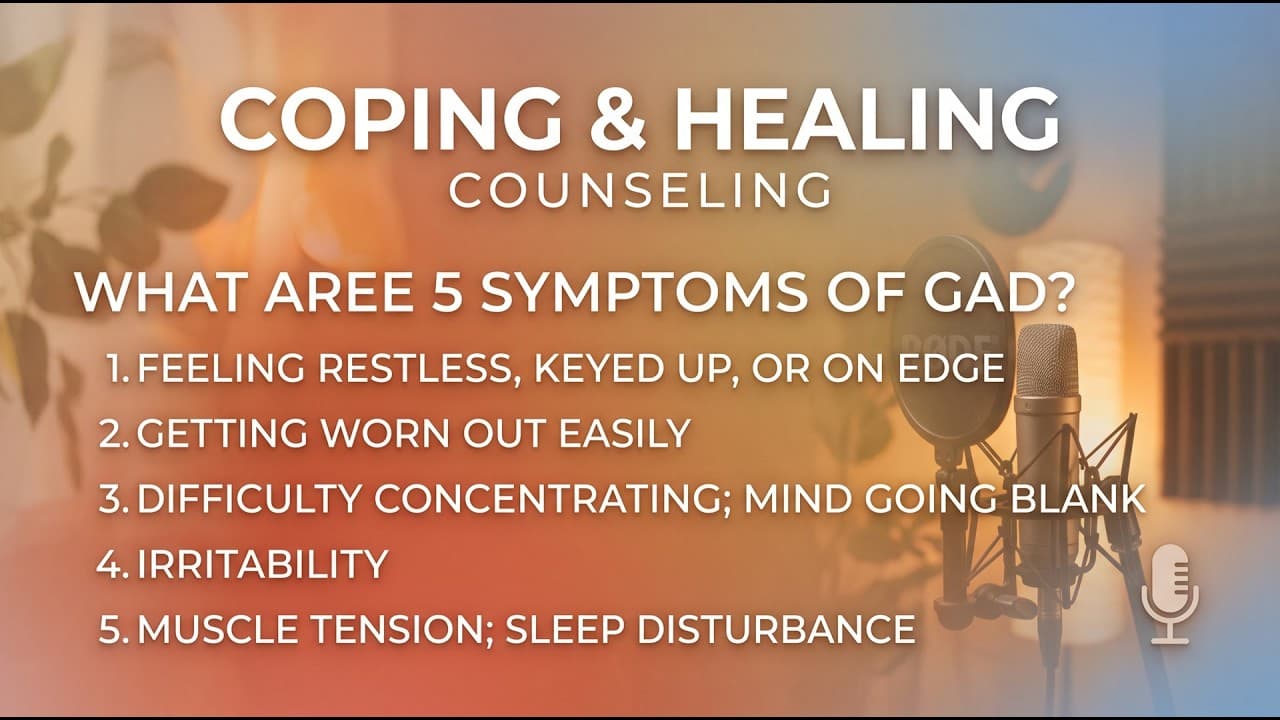
What are 5 symptoms of GAD? — Full Episode | Georgia Telehealth Therapy
What are 5 symptoms of GAD?
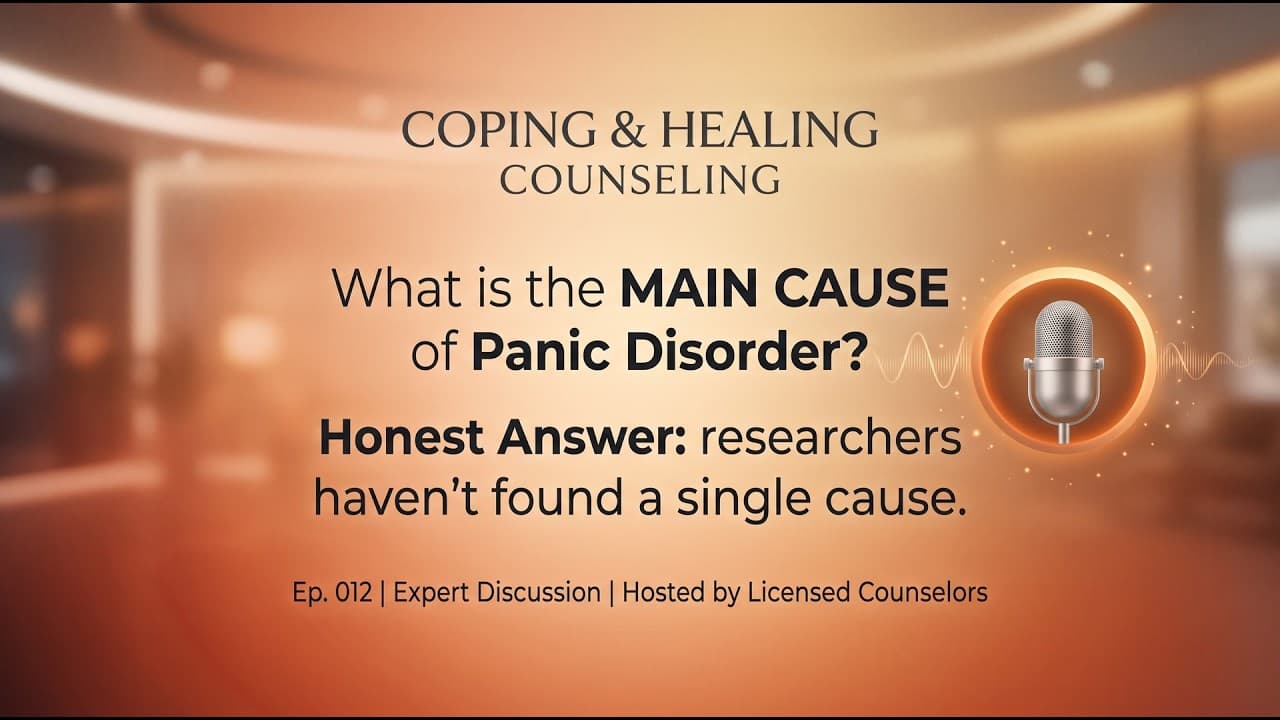
What is the main cause of panic disorder? — Full Episode | Georgia Telehealth Therapy
What is the main cause of panic disorder?
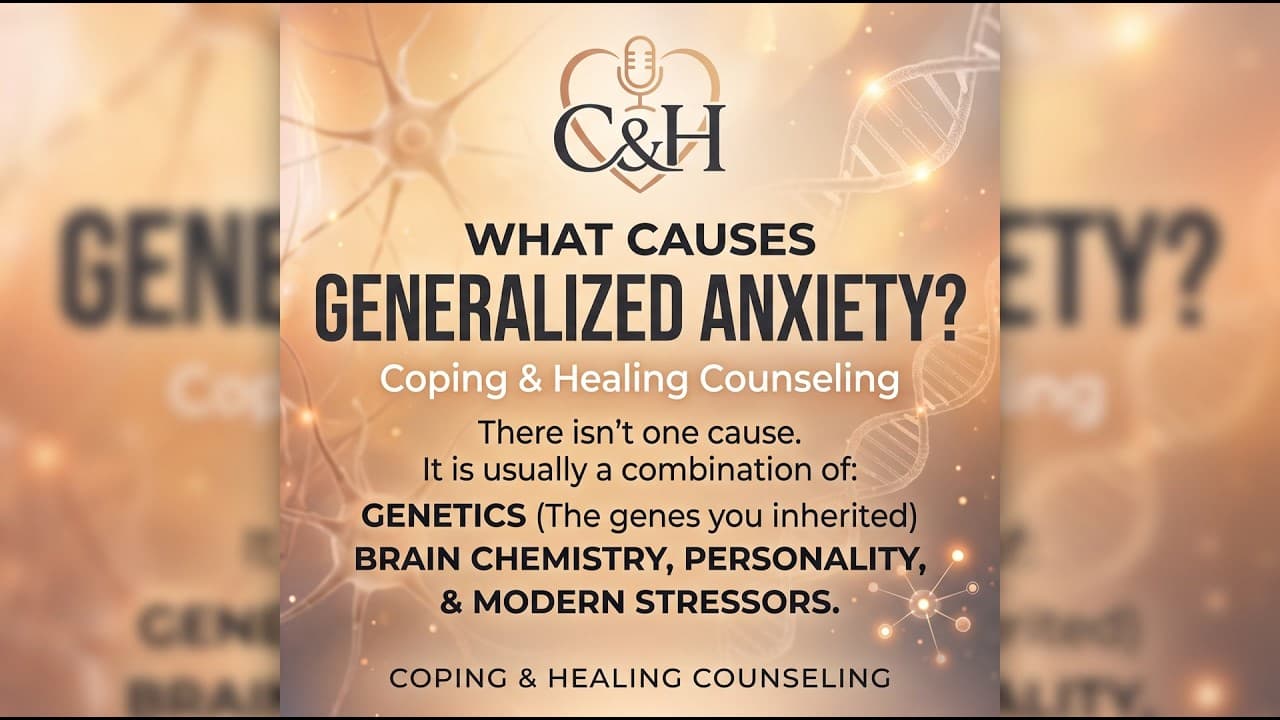
What causes generalized anxiety? — Full Episode | Georgia Telehealth Therapy
What causes generalized anxiety?
If this resonated, we have therapists who can help.
15+ licensed therapists, all 159 Georgia counties, telehealth-only. Medicaid covered at $0 copay.
Book a free consultation