
Fear of Cancer Recurrence: Signs & Treatment | Georgia Telehealth Therapy
About this video
The hardest part of cancer, for a lot of people, starts after the last treatment.
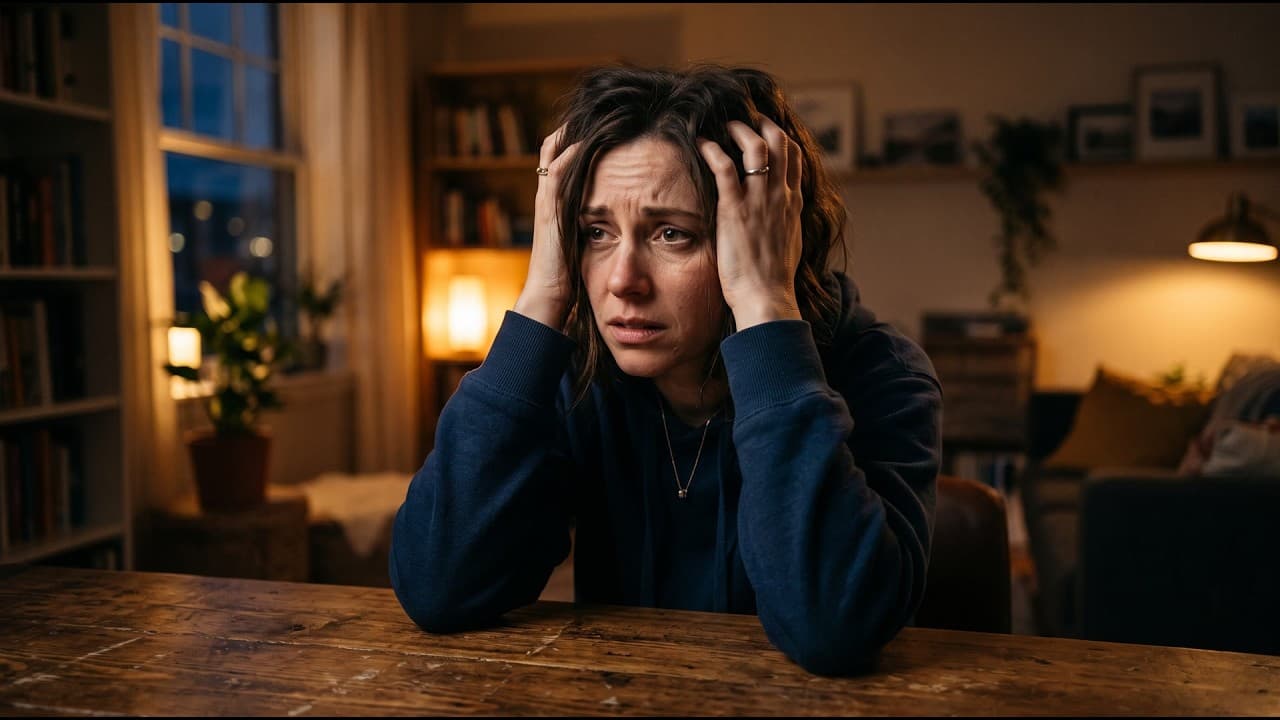
While you're in it, there's a plan. Appointments, a team, people showing up with casseroles. Then it ends, everyone exhales, and you're left alone with a follow-up schedule and a body you no longer fully trust.
A com
Transcript
Ringing the hospital bell should be the finish line. Nurses cheer, photos are taken, then the room abruptly goes quiet and everyone goes home. While you are in active treatment, there is a rigid plan. You have daily medical appointments, an attentive clinical team, and a steady stream of neighbors showing up with casserles. Then the interventions stop, and that highly structured world vanishes. You are left entirely alone in your living room, holding nothing but a calendar of follow-up check-ins and a body you no longer fully trust. The intense psychological distress that takes root in this sudden silence has a clinical name, fear of cancer recurrence. Experiencing this does not mean you are fragile and it doesn't mean
you lack gratitude for your recovery. It is a massive invisible burden that will quietly consume your good days if left unressed. This timeline shows a survivor 14 months post treatment on a strict 3-month scan rotation. For 6 weeks following a clear scan, relief holds, anxiety recedes, and normal life feels possible. But crossing week seven, the internal countdown begins. Baseline anxiety escalates quickly as the next appointment looms closer. Sleep disappears. You wake up at 2:00 a.m. researching a minor shoulder ache, convinced it is a shadow on your lung. You might find yourself snapping at a spouse or a close friend who mistakenly assumes the cancer ordeal is entirely in the past. Watching your physical health this
closely is a logical evolutionary survival instinct. Your brain is aggressively monitoring for a lethal threat. The problem is that this biological alarm system lacks a manual off switch. Fortunately, specific therapeutic approaches exist to help build one. Mental health professionals rely on protocols like cognitive behavioral therapy and acceptance and commitment therapy adapted directly for cancer recovery. Impossible standard. This floatingfulness practices anchor your attention squarely in the present moment rather than letting future oriented fears hijack your week by providing a manual override to your brain's heightened alarm system. These therapies keep a completely rational fear from dictating the terms of your recovery. Engaging this specialized therapy runs on a parallel track alongside your oncology care, not as
a replacement for it. Your medical doctors continue to closely monitor the physical disease while your therapy team actively treats the psychological aftermath. By the time you reach this stage of recovery, you have already sacrificed hundreds of exhausting hours to waiting rooms and cross town clinic drives. Coping and healing counseling offers a fully HIPPA compliant telealth model designed to eliminate that friction entirely. You connect with a licensed therapist from home without adding another commute to your day. Because the platform is entirely virtual, this service provides secure video sessions to residents across all 159 counties in Georgia. It is also designed to be highly accessible financially. Appointments carry a 0 co-ay for Medicaid, and out-ofpocket costs for
most commercial plans fall between $10 and $40 a session. Enduring months of grueling cancer treatment was about fighting to get your time back. Specialized counseling ensures you actually get to live freely during the months between your scans. To reclaim those weeks, contact Coping and Healing Counseling today.
More videos

What childhood trauma causes avoidance? | Georgia Telehealth Therapy
What childhood trauma causes avoidance?
What are 5 symptoms of GAD? | Georgia Telehealth Therapy
What are 5 symptoms of GAD?

What is the main cause of panic disorder? | Georgia Telehealth Therapy
What is the main cause of panic disorder?
Want to talk to a therapist?
15+ licensed therapists, all 159 Georgia counties, telehealth-only. Medicaid covered at $0 copay.
Book a free consultation