
Worry that won't shut off — even when... | Georgia Telehealth Therapy
In this episode
Worry that won't shut off — even when there's no real reason — is a clinical sign of Generalized Anxiety Disorder (GAD), not a personality flaw. Folks with GAD often deal with muscle tension, restlessness, and trouble sleeping for 6+ months at a time. The good news? CBT and mindfulness-based therapy
Generated from Coping & Healing Counseling: Accessible Telehealth for Georgia
#CopingAndHealing #GeorgiaTherapy #Telehealth #MentalHealth #Podcast
Transcript
So, imagine your smartphone is um just burning hot to the touch, like it's been left out in the sun. Exactly. The battery is just plummeting. I mean, going from 90% to 10% in less than an hour. Yeah. The interface is lagging and you honestly can't figure out why. You can't see anything malfunctioning on the home screen. But there's obviously something wrong. Yeah. because there is this invisible app just churning away in the background consuming all your processing power and frankly quietly destroying the operating system. It's a great analogy and right now approximately 6.8 million adults in the US are walking around with this exact malfunction happening inside their own neurology. It really is a staggering
baseline. I mean that is roughly 3.1% of the population dealing with what we clinically classify as generalized anxiety disorder or uh GAD right and what we are aiming to do today utilizing the clinical insight and resource guides developed by coping and healing counseling is deconstruct the mechanical reality of that background app. Okay, let's unpack this because I mean the casual use of the word anxiety has completely diluted its actual clinical meaning. Oh, totally. We use it for everything, right? We throw the term around for everything from, you know, being nervous about a first date to dreading Monday morning traffic. Yeah. But looking at the diagnostic criteria for GAD, the threshold is incredibly specific. It's not
just everyday stress. No, not at all. We are talking about a persistent uncontrollable worry that dominates a person's life for 6 months or more. Wow. Six months. Yes. And it leads across multiple domains simultaneously. So, uh, work, health, family, and finances. But wait, looking at that definition, I mean, six months of persistent worry about finances and health. Have you looked at the economy lately? Right. It's a fair point. Have you seen the health care system? That honestly just sounds like being an engaged, conscious adult in the modern world. You know, I hear that a lot. So, where is the actual biological line between carrying the appropriate weight of adult responsibilities and crossing over into a
clinical disorder? Well, if we connect this to the bigger picture, that six-month marker is the critical distinction between a situational stress response and a chronic neurological loop. Okay. A neurological loop. Yeah. So, in a healthy stress response, the brain encounters a problem. The amydala triggers a state of alertness. You resolve the problem and then the prefrontal cortex sends an allcle signal to stand down. Tells the body like, "Hey, we're safe now." Exactly. But with GAD, that feedback loop is fundamentally broken. The prefrontal cortex fails to downregulate the threat response. Oh wow. So the nervous system becomes trapped in a state of hypervigilance. It becomes literally unable to distinguish between a looming deadline and an existential
threat to survival. So the background app continues to run. Yes. A person without GED might sit down, look at a stressful bank statement, experience a sharp spike in cortisol, build a budget, and then move on with their evening. Right. The stress has a discrete trigger and a discrete resolution. Precisely. The line into clinical GAD is crossed when the worry completely detaches from the trigger. It becomes autonomous. You can't just close the spreadsheet and stop the physical reaction. Exactly. It's draining your cognitive battery long after the external problem has been addressed. And the battery drain isn't just cognitive, which is honestly where this condition gets truly insidious. Oh, the physical toll is massive. Yeah. I mean,
GAD is notorious for presenting first in primary care settings, not in a therapist's office. Right. They go to a medical doctor first. Exactly. People are booking appointments with their general practitioners for severe sematic symptoms. They're showing up completely exhausted, dealing with intense muscle tension, severe sleep disturbances, and like chronic gastrointestinal distress. They think they have a stubborn virus or some obscure physical disease. It's like the check engine light flashing on your car's dashboard. Yeah, the stomach and the muscles are flashing the warning, but the actual malfunction is in the computer system up in the brain. That's a perfect way to look at it. And what's fascinating here is the sheer power of the mind body
connection. Patients frequently have zero idea that their underlying issue is psychological. They just know their stomach has been in knots for weeks, right? Or their lower back is totally locked up. And biologically this makes perfect sense when you understand the hypothalamic pituitary adrenal axis or um the HPA axis. Okay. The HPA axis. Yeah. When your brain is stuck in that six-month loop of uncontrollable worry, it continuously signals the adrenal glands to pump out cortisol and adrenaline. So your body is perpetually mobilized for a physical conflict that never actually arrives. Yes. So the body is just absorbing the impact of a phantom punch over and over again. Exactly. It's less like the cliche analogy of a
bear chasing you through the woods and more like having a hyper sensitive home security system. Oh, I like that. Like a leaf blows across the lawn and the alarm system blar at 120 dB. Yes. The sensors are calibrated so aggressively that the system no longer knows the difference between a falling leaf and an intruder kicking in the front door. A hypers sensitive security system is the perfect framing. Just think about what sustained adrenaline does to muscle tissue. It can't be good. No, your muscles remain perpetually guarded, waiting to spring into action, which eventually causes severe cramping and tension aches, particularly in the neck and shoulders. Wow. Furthermore, the autonomic nervous system shunts blood away from
non-essential functions during a perceived crisis. And digestion is deemed non-essential if you're trying to survive. Exactly. That is why GAD wres such havoc on the entic nervous system which is the vast network of neurons lining your gut. So the chronic nausea and GI distress are like direct physical manifestations of the brain signaling the gut to shut down. Yes. The operations are literally put on hold. The physiological toll is just immense. And the compounding factor here is that GAD rarely operates in a vacuum. Right. It frequently co-occurs with depression. Very often. Yes. So the security system is blaring constantly. The physical hardware is breaking down from the vibration and eventually the entire grid starts to brown
out. That brown out is the depressive overlap. The central nervous system can only sustain that level of hyperarousal for so long before neurochemical depletion sets in. So the exhaustion isn't just from a lack of sleep. No, it is the actual result of neurotransmitters being metabolized at an entirely unsustainable rate. Which honestly brings us to the danger of trying to troubleshoot this yourself using a search engine. Oh, Dr. Google. Yes, we all know the trap, right? You type stomach pain and fatigue into an online symptom checker and you immediately spiral into a panic about having a rare terminal illness. It happens every day. This raises an important question though about how differential diagnosis actually functions in
modern medicine. How so? Well, when you walk into a clinic with a racing heart, insomnia, and pervasive dread, a professional isn't just matching your symptoms to a checklist to hand you an anxiety label, right? The most crucial part of their job is systematically ruling out severe medical conditions that perfectly mimic the physiological presentation of GAD. Here's where it gets really interesting. I knew mental health diagnosis involved understanding a patient's history, but I didn't fully appreciate that it is primarily a ruthless process of biological elimination. It absolutely is. The clinician has to play medical detective to ensure the patient doesn't have like a hidden hormonal or cardiac defect masquerading as a psychological issue. And those mimics
are remarkably convincing. Take hyperyroidism for example. Okay? If your thyroid gland is overactive, it is dumping excessive amounts of the hormones T3 and T4 into your bloodstream, which speeds everything up, right? And it artificially accelerates your basil metabolic rate. Your heart races, your core temperature rises, you sweat, and your mind races and your brain interprets this sudden unexplained physical arousal as panic. Exactly. Treating an overactive thyroid gland with mindfulness techniques or cognitive restructuring is completely feudal. The thyroid does not respond to psychological coping mechanisms because the hardware is actually broken in that scenario, not the software. Precisely. And the same logic applies to cardiac issues. Certain arrhythmias can cause sudden terrifying spikes in heart rate
and chest tightness that feel identical to a severe anxiety attack. And we also have to account for the impact of substance use or withdrawal like alcohol. Yes, alcohol is a central nervous system depressant. It artificially boosts the inhibitory neurotransmitter GABA. But when the alcohol leaves the system, the brain is left with a severe GABA deficit and an excess of glutamate which is excitatory. So it creates an electrical storm in the brain. Exactly. A storm that manifests as profound physical and mental anxiety. A clinician must parse out whether the nervous system is reacting to a psychological loop or if it is chemically detoxing. And beyond ruling out the physical mimics, the clinician is also scanning for
co-occurring psychological conditions that completely change the calculus of the treatment plan. Right. No. The source material notes they're looking closely for conditions like PTSD or ADHD. Yes. Because the underlying eeology um the root cause dictates the entire strategy. So if a patient's chronic worry is rooted in the executive dysfunction of ADHD, meaning they are anxious because their brain literally struggles to organize tasks and manage time, right? The intervention for that looks vastly different than if the anxiety is rooted in the unresolved trauma responses of PTSD. Exactly. A specialized professional maps out that unique neurobiological landscape so you don't waste years applying the wrong tools. Well, let's transition into those tools because once the diagnostic detective
work is done, you know, once the mimics are ruled out and the condition is accurately identified as GAD, the focus shifts entirely to the mechanics of treatment, right? How do we actually fix it? And according to the clinical guide, the prevailing first-line care is cognitive behavioral therapy, specifically utilizing cognitive restructuring paired with worry exposure. Yes, CBT and worry exposure. And I really want to dig into the exposure element. It is arguably the most powerful mechanism in the clinical toolkit, but logically it sounds absurd on its face. I mean, if my fundamental problem is that my internal security alarm won't stop blaring and I'm totally exhausted from the noise, why on earth would a therapist deliberately
expose me to the exact thoughts that trigger the alarm? That sounds like torture. It feels incredibly counterintuitive until you look at the mechanism of habituation. Okay, habituation. Right now, when a triggering thought enters a G80 patient's mind, the brain classifies the thought itself as a lethal threat. The patient immediately panics, tries to suppress the thought, and engages in avoidance behaviors. They try to run away from it. Yes. But neurologically, avoidance reinforces the fear. Every time you run away from the thought, you confirm to the amygdala that the thought was indeed dangerous. The six-month loop just gets stronger. Oh, wow. So avoidance is essentially feeding the algorithm. Yes. Worry exposure deliberately interrupts that cycle. How so?
In a highly controlled therapeutic environment, the clinician guides the patient to confront the feared thought and just sit with the ensuing physical discomfort without fleeing or trying to neutralize it. So you just have to write it out. You are forcing the amydala to endure the spike in anxiety until it naturally plateaus and descends. Through repeated exposure, the nervous system underos what we call extinction learning. Extinction learning. Yes, the brain physically rewires its response. It finally learns that thinking about a financial stressor is not the biological equivalent of being attacked by a predator. You decouple the thought from the physiological panic response. It's basically forced neuroplasticity. You are literally recalibrating the sensors on the security system
so a gust of wind doesn't trigger the siren. That's exactly what it is. And the clinical framework also incorporates other robust modalities, right? like acceptance and commitment therapy or act alongside mindfulness-based intervention. Yes, those have very strong research behind them. But the guide also explicitly factors in the role of pharmarmacology. Absolutely. Medication is a vital structural support particularly for moderate to severe presentations. SSRIs and SNRIs are heavily utilized. Let's explain the mechanics of how those actually lower the volume of the anxiety because I mean people often misunderstand anti-depressants as just happy pills, right? They aren't altering your personality, you know, they are altering the efficiency of your neural pathways, right? When neurons communicate, they release
neurotransmitters into a tiny gap called the synaptic cleft, right? And then they quickly reabsorb them. SSRIs basically block that reabsorption process for serotonin, leaving more of the neurotransmitter active in the cleft for a longer period. And that helps the brain. Yes. This enhanced serotonin signaling promotes neural connectivity and helps the prefrontal cortex regain control over the hyperactive amydala. So the medication physically lowers the baseline reactivity of the nervous system. The alarm is just less sensitive. Exactly. And often a patient's baseline anxiety is so severe that they cannot effectively engage with cognitive restructuring or worry exposure at all because the physical panic is just too loud. Yes, the medication turns the volume down just enough so
the patient can actually absorb the behavioral therapy and do the hard work of rewiring the brain. That makes so much sense. The combination of medication and therapy consistently yields the most durable clinical outcomes. It is a beautifully complex multi-tool approach. But you know, here is the brutal reality check for the listener. Yes, understanding the neurobiology of habituation and the mechanism of reuptake inhibitors is entirely useless if the patient cannot access the care. Having the blueprint to fix the engine doesn't matter if you can't get into the garage. It's so true. The friction of the traditional health care system is often the ultimate barrier to entry particularly for a condition that inherently drains a person's energy.
Exactly. If you are battling the sematic symptoms of GAD, I mean if you are severely fatigued, your muscles are aching and your gut is in absolute turmoil. The absolute last thing you are capable of doing is fighting through 45 minutes of traffic, right? Sitting in a sterile waiting room under those awful fluorescent lights and then navigating the commute home. The logistical friction alone is enough to make a patient completely abandon treatment. It happens constantly. Which is why looking at the structural model of coping and healing counseling or CHC is so relevant to this discussion. Yes, the CHC model is essentially a case study in dismantling that logistical friction by operating as a completely teleaalthbased hypo
compliant practice. They are bypassing the physical infrastructure that prevents so many from seeking help. They literally bring the clinical toolkit straight into the patients living room. And it's not just about removing the commute. It's about geographic and demographic scale. Right. They cover the entire state. Yeah. Their infrastructure covers all 159 counties in Georgia. They provide access to a diverse roster of over 15 licensed therapists, LCSSWS, LPC's, LMFTs. They offer individual, couples, family, and teen therapy for kids 13 and up. They are matching the broad scoop of the disorder with an equally broad scope of culturally competent care. And the financial side, I mean, it's huge. Medicaid is a Z co-pay. Wow. Yeah. And major commercial
insuranceances like Etna, Sigma, Blue Cross, Blue Shield, UHC, Humanana, those are only about $10 to $40 per session. You can reach them at 4048320102 or just go to cheat therapy.com. You know, the most profound aspect of a model like this is the true democratization of mental health resources. Providing tellaalth is one piece of the puzzle, but deliberately integrating with public health options like Medicaid is what actually moves the needle. Yeah. Making it affordable. By accepting both major commercial networks and public options, platforms like this neutralize the financial paralysis that keeps people suffering in silence. They treat the lack of access as a systemic symptom that must be solved alongside the clinical symptoms. So, what does
this all mean? When we zoom out and look at the entirety of what we've unpacked today, the narrative around anxiety just has to radically shift. It really does. We have to stop viewing chronic worry as a fixed personality trait or like a a moral failing that someone just needs to tough out. It is a quantifiable mechanical malfunction of the nervous system. The background app gets stuck running. The HPA axis floods the body with stress hormones and the physical hardware begins to degrade. And we've seen that because it masks itself as a sematic illness, you know, destroying sleep and digestion, it demands a rigorous professional diagnosis. You cannot Google your way out of a hyperactive thyroid
or a chemical withdrawal. No, you cannot. And most importantly, we've seen that the brain can be fundamentally rewired through habituation and pharmacological support and that modern tellahalth infrastructure is making those solutions incredibly accessible. The machinery can be fixed. It is a highly treatable condition once it is accurately identified. And as we conclude, I want to pose something for you, the listener, to continuously reflect on. Okay. We spent a significant amount of time today detailing how psychological distress physically alters the gut, the muscles, and the heart rate. Yeah. If our neurology is capable of manifesting such severe sematic disease, it forces us to question the rigid boundaries of modern medicine. That's a great point. If a
malfunctioning prefrontal cortex can effectively shut down the digestive system, how much longer can our medical institutions treat the mind and the body as two separate entities? The doctors of the future may find that untangling the complexities of human health requires treating the brain and the body as one entirely indivisible system. That is a brilliant provocation to leave us with. The dashboard and the underlying computer are fundamentally wired together. To you, the listener, thank you for taking this deep dive with us today. Whether you are analyzing this for your own academic understanding, attempting to support a loved one, or finally trying to figure out why your own internal alarm system won't stop blurring, the power is
in understanding the mechanics. Keep asking questions, keep dismantling the noise, and we will catch you on the next deep dive.
More episodes
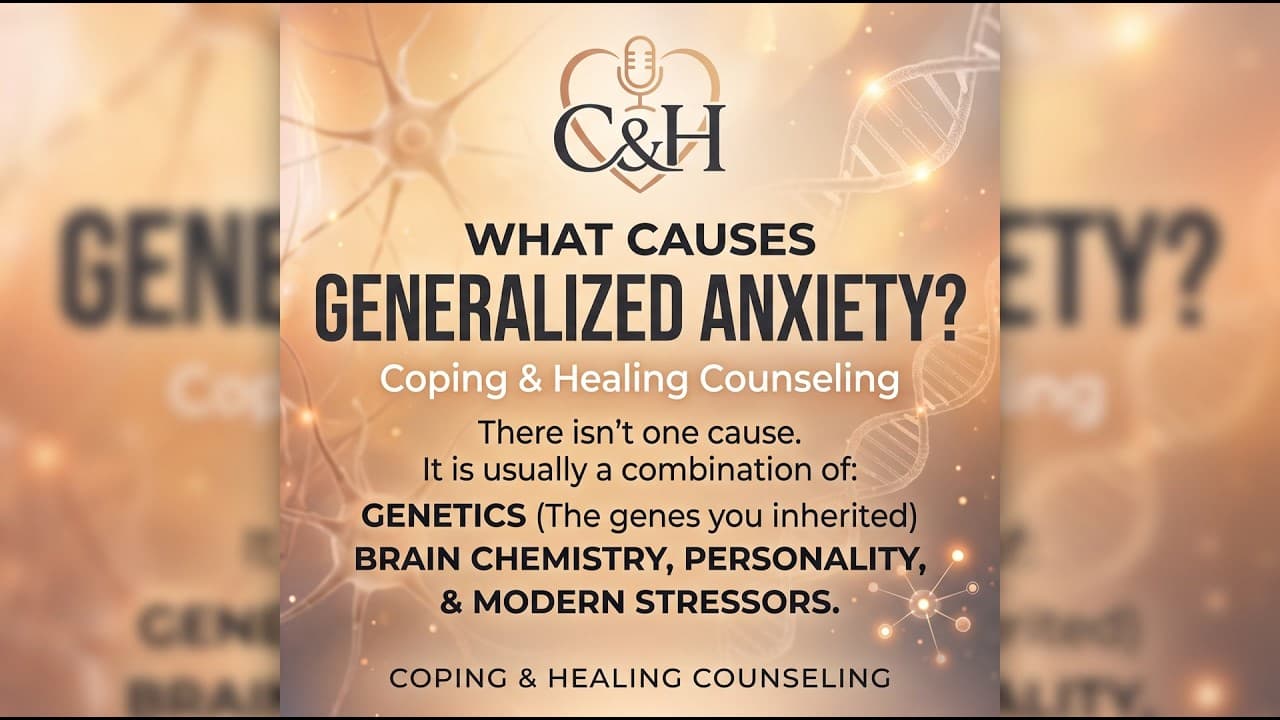
What causes generalized anxiety? — Full Episode | Georgia Telehealth Therapy
What causes generalized anxiety?
What are the 5 symptoms of major depressive disorder? — Full Episode | Georgia Telehealth Therapy
What are the 5 symptoms of major depressive disorder?

RSD and ADHD: Why One Short Text Can Wreck Your Whole Day | Georgia Telehealth Therapy
This one is for the friend who apologizes three times in a single text.
If this resonated, we have therapists who can help.
15+ licensed therapists, all 159 Georgia counties, telehealth-only. Medicaid covered at $0 copay.
Book a free consultation