
Scanxiety: Living in Three-Month Increments After Cancer | Georgia Telehealth Therapy
In this episode
The hardest part of cancer, for a lot of people, starts after the last treatment.
While you're in it, there's a plan. Appointments, a team, people showing up with casseroles. Then it ends, everyone exhales, and you're left alone with a follow-up schedule and a body you no longer fully trust.
A com
Transcript
You know, when someone rings that uh that victory bell in the hospital oncology ward, everyone cheers, right? It's a huge moment. It is. And we all just assume it's this definitive finish line. We have this like collective cinematic image of the survivor walking out into the sunshine and just I don't know, effortlessly resuming their normal life. Yeah. The classic movie ending. Exactly. But we're looking at some source material today. a clinical overview and service breakdown from Coping and Healing Counseling or CHC. They're a a teleaalth therapy practice in Georgia. And it paints a much quieter honestly a much harder reality. It really does. It completely changes the narrative. Yeah. Because for a lot of survivors,
ringing that bell is actually the starting gun for completely different kind of marathon. So our mission today for you listening is to really get into this hidden psychological battle of cancer survivorship, specifically the fear of recurrence. And it's such an important topic because it forces us to re-evaluate how we handle medical trauma. Okay, let's unpack this. Society tends to view being cancer-free as the end of the road, but this clinical material suggests it's actually the starting line for a major mental health crisis. What's fascinating here is that synthesizing these clinical details from CHC gives us this profound insight into how the mind actually processes survival. Right? The physical danger might have passed, but the neurological
and psychological hurdles are really just beginning. We have to look at why the brain panics when it's supposedly safe. Well, let's talk about the active treatment phase first because it's such a paradox. Like while a patient is in the thick of it fighting the illness, they have this incredibly concrete plan. You're on a mission. Exactly. There's a dedicated medical team, you know, monitoring every vital sign. And socially, the text specifically notes this is the phase where people are showing up with caperals. Cassal phase. Yeah. It's a temporary scaffolding of intense community support and then suddenly treatment ends. The scaffolding just drops, right? The casserole stop coming. The medical team steps back to like a routine
follow-up schedule and the survivor is just standing there in a really quiet house with a body they don't completely trust anymore. Yes. It feels like well it feels like bracing for a hurricane while the storm is raging. You have emergency crews everywhere. A strict action plan. Everyone is mobilized. But once the storm passes and the crews leave, you're standing in a quiet house absolutely terrified every time the wind blows. That's a great way to put it. So, here's where it gets really interesting. Why is it that safety actually feels more terrifying than the active fight? Well, during treatment, action actively suppresses fear. The brain is leaning heavily on the sympathetic nervous system, prioritizing high stakes
execution, just getting through the day. Exactly. Go to chemo, take the medication, recover from surgery. Your brain is pragmatic. It knows you don't have the cognitive luxury of fully breaking down while you're actively trying to stay alive. So, you're just running on adrenaline, adrenaline and cortisol. But when that action stops, the brain finally has the space to process the trauma. And that's when the hypervigilance kicks in, right? The threat detection center, the amygdala, realizes a life-threatening danger infiltrated the body previously. So, it refuses to let its guard down again. Which brings us to this hypers specific thing in the text that I think will really anchor this for you guys listening. It's called skxiety. Oh
yeah. A very real, very common phenomenon. The deep dive goes into this composite case study of a woman who finished treatment 14 months ago. She's over a year out and she gets scans every 3 months to make sure she's still clear. And that 3 month cycle dictates her entire reality. Totally. So for the first 6 weeks post scam, she's actually fine. She's living her life. But then she crosses at halfway mark and the six week countdown begins. The internal pressure cooker starts building. Her sleep just vanishes. The text describes her being wide awake at 2 a.m. obsessively googling a minor shoulder ache, convinced the cancer is back and in her bones because her brain is
telling her every ache is an emergency, right? And eventually she snaps at her husband over something totally trivial. And he's just bewildered because he's operating on that cinema ending narrative. To him, the ordeal is entirely over. Right? There's a tragic misalignment there. He thinks survival is past tense and she is experiencing it as a daily present tense negotiation. So, let me play devil's advocate here because this is what happens in the real world. When a survivor snaps at their spouse or spirals over a shoulder ache, society sometimes labels that as, you know, being ungrateful for surviving or just being fragile. Is that what's happening here? Oh, absolutely not. And the source text is very clear
on this. Watching your body closely after cancer is a completely reasonable instinct. So it's not a character flaw. Not at all. It's a biological survival mechanism. The brain is doing exactly what it evolved to do. Protect you from a known deadly threat. It's trying to keep you alive. Exactly. The problem isn't the instinct itself. The problem is that the instinct doesn't come with an off switch. Wow. Yeah. It just quietly eats away all those good months of survivorship you fought so hard for. Right. And because that off switch is broken, standard therapy, like just talking it out or forcing a positive mindset isn't going to be enough because you can't just logic away a primal
survival instinct. Exactly. You need specialized targeted clinical interventions. The text highlights things like cognitive behavioral therapy or CBT protocols developed specifically for the fear of recurrence and acceptance and commitment therapy too, right? ACT. Yes, ACT along with mindfulness programs designed specifically for cancer recovery. And the goal with these isn't to just like stop the patient from ever thinking about cancer, right? Because they still have to go to their scans, right? The threat of recurrence is a statistical reality. No therapist can promise it won't come back. The goal is to keep the fear from owning the weeks between those scans. It makes me think of uh like a home security system. Okay. How so? Well, the
goal isn't to unplug the alarm system entirely because you still need to be aware for your physical health. You know, lock your doors, go to your checkups, right? You still need protection, but you want to recalibrate the sensors so a squirrel running across the front lawn doesn't trigger a five alarm emergency response with helicopters at 2 in the morning. That is a perfect analogy. You're recalibrating the sensors. And if we connect this to the bigger picture, we're seeing a shift in modern healthcare. Mental health care like this runs alongside the oncology team. It's a parallel specialized track, not just some afterthought once the chemo is done. Okay, so that covers how the treatment works. Let's
talk about where and how it's actually delivered because the logistics of coping and healing counseling are a huge part of this text. The logistics are everything for medical trauma survivors. Yeah. So, CHC operates a 100% teleaalth iipa compliant model. They serve literally all 159 counties in Georgia, which removes a massive barrier to entry. Right. The text explicitly says patients have already spent enough of your life driving to appointments. So my question is, why is the teleaalth aspect specifically highlighted as a core therapeutic feature here rather than just, you know, a modern convenience like ordering groceries online? Because for trauma survivors, especially medical trauma, the logistics of care are often massive triggers. Like just being in
a medical setting. Exactly. Think about the sensory reality of their illness. The driving to hospitals, fighting for parking, sitting in sterile waiting rooms, paying co-pays at a front desk. The smell of the antiseptics. Yes. All of those logistical frictions are deeply encoded reminders of their trauma. So if you force them to navigate that just to get therapy, you're triggering the exact nervous system response you're trying to calm down. Oh wow. So, by removing the geographical barriers covering all 159 counties, they're actively avoiding triggering the patient. Right. CHC uses logistics as a form of empathy. They are meeting the exhausted patient exactly where they are in the safety of their own home. That makes so much
sense. And they have the staff to back it up, too. The text mentions they have 15 plus licensed therapists. It's a very robust team. Yeah. Licensed clinical social workers, LPC's, marriage and family therapists. They say it's a diverse, culturally competent team offering individual, couples, family, and teen therapy for ages 13 and up, which is critical because cancer doesn't just happen to the individual. The blast radius hits the whole family, right? Going back to the husband in the story who thought it was over. He probably needs tools just as much as she does to understand what's happening. Absolutely. The whole family system needs a shared language to navigate the aftermath. Plus, they offer life coaching and
specialize in anxiety, depression, trauma, PTSD, grief. It's very comprehensive. And they tackle the financial side headon, which I thought was super interesting. Financials are totally transparent. For Medicaid, it's a Z co-pay. That is a profound intervention right there. Medical battles completely drain financial resources. Yeah. And for commercial plans, they list Etna, Sigma, Blue Cross Blue Shield, United Healthcare, Humanosaural Visual. It's just $10 to $40 per session. By removing that financial friction, they allow the patients cognitive resources to focus entirely on the healing process. Totally. And uh for anyone listening who wants to look into this, the contact info in the text is chainup therapy.com or you can call 404832102 or email support at chainupapy.com. It's
just about creating a seamless access point that doesn't compound the exhaustion. Exactly. So, bringing this all together, why does this matter for you, the listener? Whether you're a survivor yourself dealing with this broken off switch, or you're a partner trying to understand why your spouse is spiraling over a shoulder ache, this deep dive proves that the end of physical treatment is really just the beginning of emotional healing. It really is. And I'd love to leave you with a final thought-provoking idea to maul over, building on that concept of the missing off switch. Yeah, let's hear it. We often assume the goal of survivorship is to just simply revert back to the person you were before
the illness, right? The old normal, right? Getting back to who you used to be. But if your brain has fundamentally rewired itself to protect you with this intense hypervigilance, maybe true healing isn't about trying to go backward to your old self at all. Oh, that's interesting. Instead, it's about asking, who is this new, intensely self-aware version of you supposed to become now that the immediate physical threat has passed? Wow. So, it's not about unringing the bell. It's about figuring out how to live with the new alarm system. Exactly. Moving forward, not backward. I love that. Well, thank you for taking this deep dive with us. We'll catch you next time.
More episodes
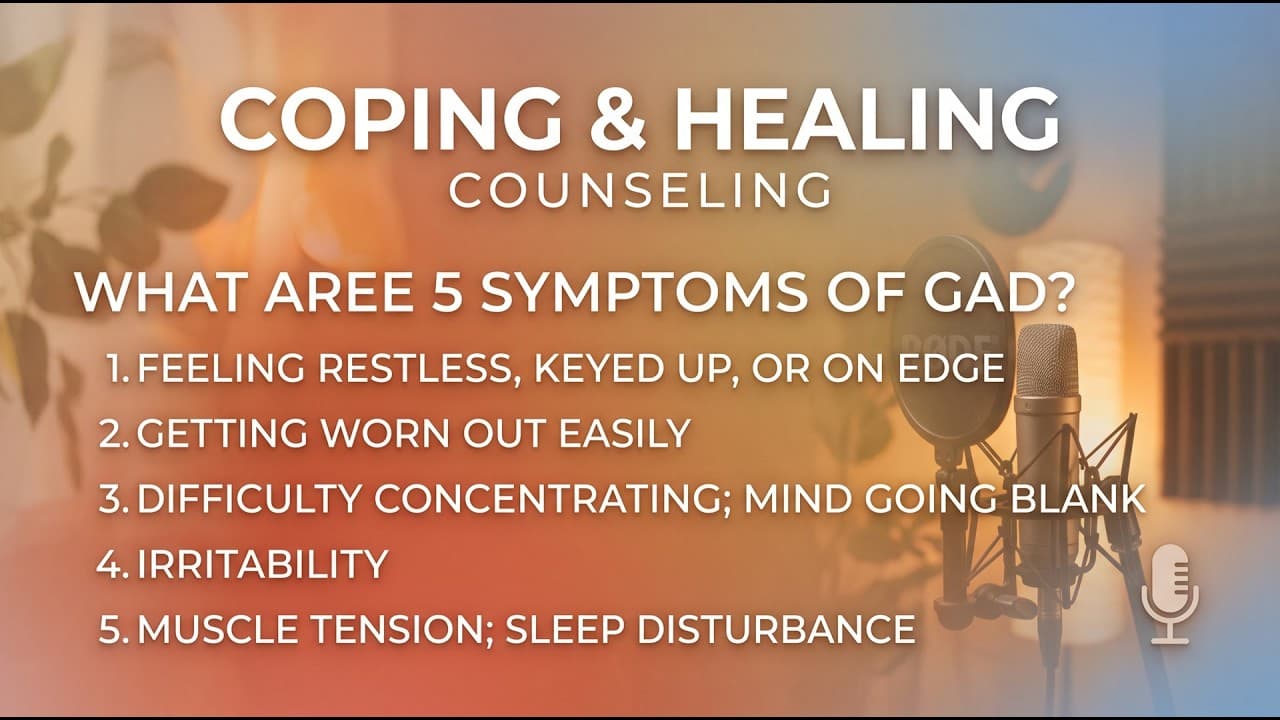
What are 5 symptoms of GAD? — Full Episode | Georgia Telehealth Therapy
What are 5 symptoms of GAD?
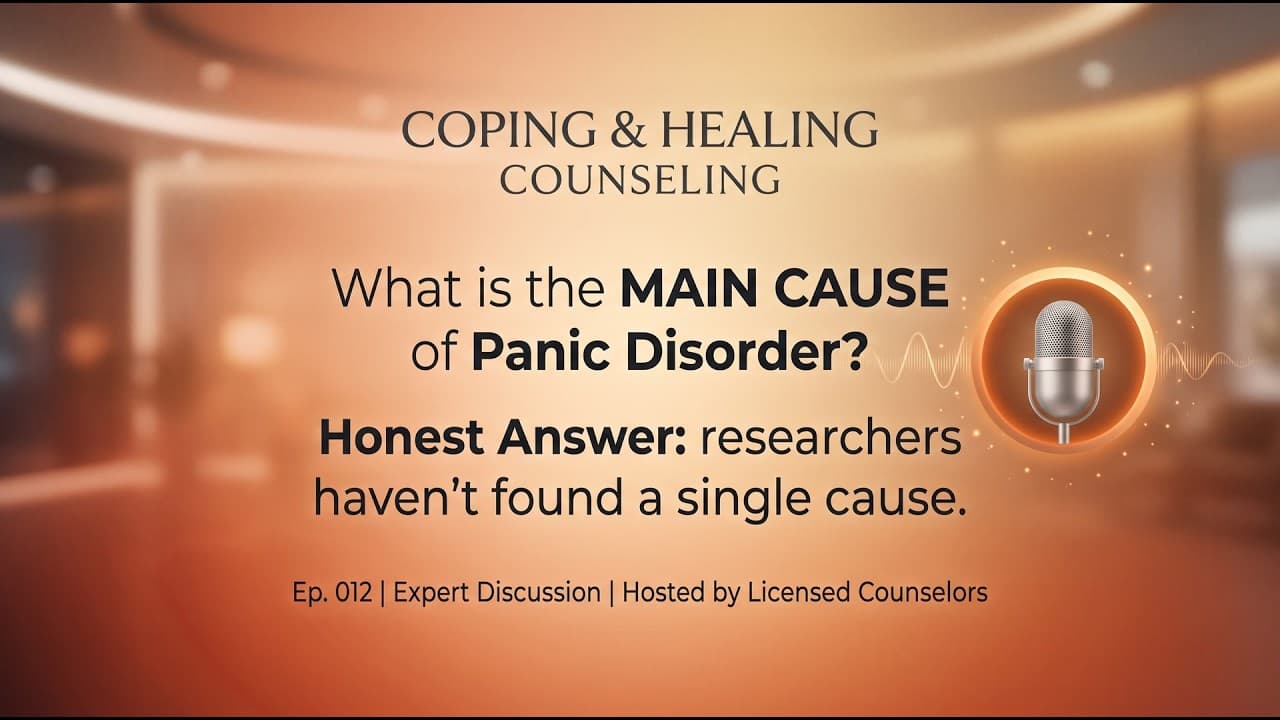
What is the main cause of panic disorder? — Full Episode | Georgia Telehealth Therapy
What is the main cause of panic disorder?
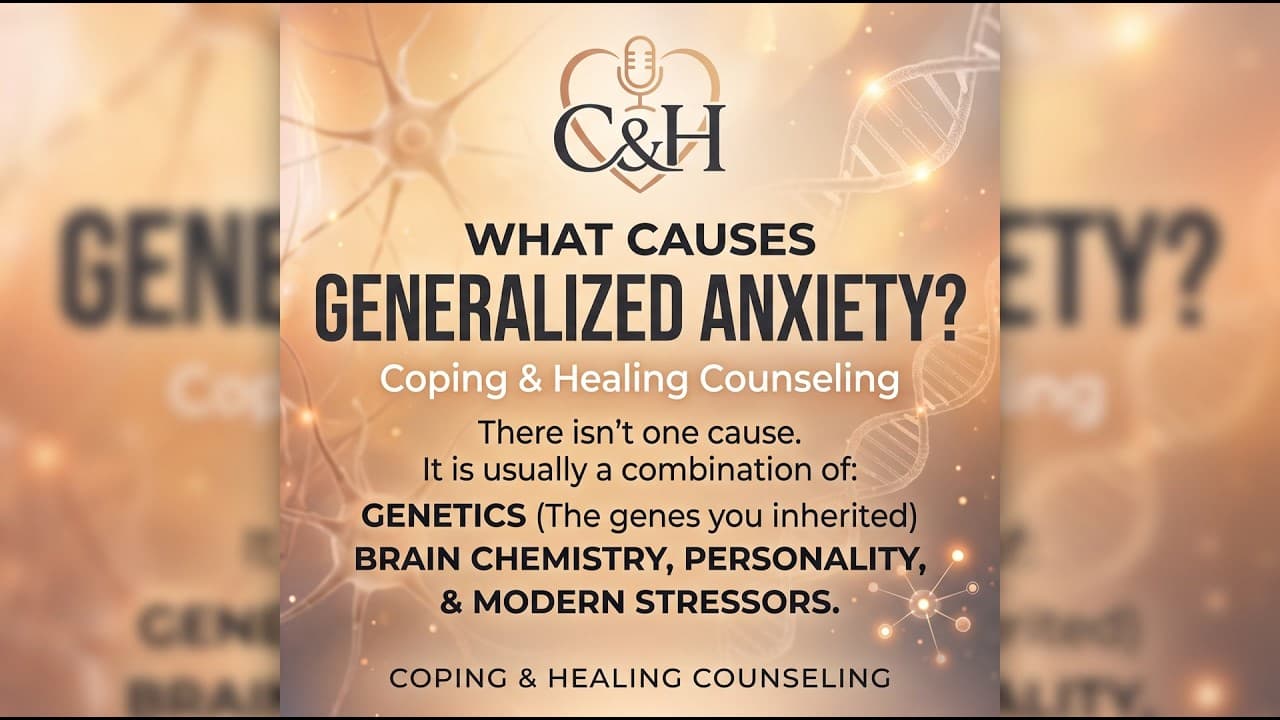
What causes generalized anxiety? — Full Episode | Georgia Telehealth Therapy
What causes generalized anxiety?
If this resonated, we have therapists who can help.
15+ licensed therapists, all 159 Georgia counties, telehealth-only. Medicaid covered at $0 copay.
Book a free consultation