
Saturday morning explainer — Generalized... | Georgia Telehealth Therapy
In this episode
Saturday morning explainer — Generalized Anxiety Disorder, or GAD, is more than 'being a worrier.' Clinically, GAD is persistent, excessive, hard-to-control worry about everyday things — work, health, family — most days for at least 6 months, alongside physical symptoms like muscle tension, sleep ch
Generated from Coping & Healing Counseling: Accessible Telehealth for Georgia
#CopingAndHealing #GeorgiaTherapy #Telehealth #MentalHealth #Podcast
Transcript
Imagine opening your computer browser. Oh boy. Right. And you have like 50 tabs open at once. Oh, that is the worst. Right. And a video is autoplaying somewhere in the background. The computer fan is just screaming. Your cursor is lagging. And no matter how frantically you click around, you you just cannot figure out which tab is making all that noise. It's completely overwhelming. Yeah. And you just can't shut it off. But the thing is that isn't just a frustrating day at the office. For millions of adults, that is the daily inescapable reality of generalized anxiety disorder or GAD. It really is an everyday reality for so many. Exactly. So, today we are tailoring this deep
dive specifically for you, the listener, who really wants to cut through all the social media buzzwords and uh pop psychology. We are digging into this fascinating stack of clinical materials from coping and healing counseling to understand what actually separates normal everyday stress from a recognized DSM5 medical diagnosis. And that distinction is so important because I mean we throw the word anxiety around so casually today, you know, constantly, right? Like someone might say traffic is giving them major anxiety or they feel anxious about a looming deadline at work. Sure. Which is totally normal. Exactly. Those feelings are valid emotional reactions to temporary stressors. Yeah. But a clinical disorder, well, it operates on an entirely different level,
right? So, our goal today is to look under the hood. We want to explain not just what GAD is mechanically, but why accurately identifying it is really the critical first step to getting your life back, which is huge. It is because when you finally understand how the alarm system in the brain gets hijacked, you you stop blaming yourself for the noise. Okay, let's unpack this. Yeah, because I have to admit I sometimes struggle to see where the clinical line is drawn. You know, that's incredibly common. Yeah, because if we look at the core definition of GED, it's described as this persistent, excessive, and hard to control worry. And it's not about bizarre, irrational phobias, right?
It's about everyday things, right? The mundane stuff. Yeah. People are worrying about their jobs, their health, their family, their finances, the future. And I mean, life is incredibly expensive right now. The world is complicated. It certainly is. So, isn't it just entirely rational to be worried about things like your retirement fund or your kids? Like, how does a clinician actually draw the line between a responsible, forward-thinking adult and someone who has a disorder? What's fascinating here is what we call the normalization trap. The normalization trap. Yeah. Yeah. Many people who suffer from GAD actually don't recognize that they have a condition at all for the exact reason you just mentioned. Oh. Because they think everyone
feels that way. Exactly. They rationalize the dread. They tell themselves that, well, anyone who isn't losing sleep over the economy is just being irresponsible. Right. Right. Or they write it off as a character trait, you know, saying things like, "I'm just a planner. I'm a worrier. This is just my personality." So, they think this screaming computer fan is just how all computers sound. Perfectly stated. Yeah, that's exactly it. The distinction really comes down to two primary factors. It's the absolute inability to control the worry and the severe distress or impairment it causes. Okay, so it's the control aspect, right? It is the difference between thoughtfully reviewing your budget to plan for a financial dip and
lying awake for five nights in a row feeling literally physically sick with dread over a financial collapse that hasn't happened and probably never will happen. Exactly. Furthermore, there is a strict timeline involved here. To meet the DSM5 criteria, this excessive worry has to be present for more days than not for at least 6 months. Wait, 6 months? That's half a year of waking up with that pit in your stomach. Yes, that isn't just a stressful season at work or the jitters before a big move. No, not at all. And 6 months is an absolute eternity when your brain is running a constant threat assessment algorithm. I can't even imagine. I mean, sufferers describe the worry
as being always on. and it runs in the background even during moments that are entirely safe and should be joyful. So you could just be having a nice weekend and it's still there. Exactly. You could be sitting at a child's birthday party or I don't know watching a beautiful sunset and your brain is compulsively generating worst case scenarios. Wow. You literally lose control over your own attention. Here's where it gets really interesting. Okay. Because the mental aspect of GAD can feel so normal to the person experiencing it. The clinical materials actually point out that it is often the physical toll that finally forces someone to seek help. Yes, the body really does keep the score,
right? Because a person might think their thought patterns are totally fine, like we just said, but they know their body is breaking down. There is this deep irony that a so-called mental health issue shows up so heavily as a physical bodily problem. Well, the mind and body are fundamentally one connected system, right? Definitely. When you live in a state of constant mental apprehension, your brain sends a continuous signal to your adrenal glands that you are in literal danger. It's preparing for a fight. Exactly. And according to the DSM5, the anxiety must be associated with at least three specific physical symptoms. Like what? Things like restlessness, difficulty concentrating, irritability, sleep disturbance, muscle tension, or fatigue. And
when someone actually walks into a doctor's office, what does that look like? Because I'm assuming people aren't usually saying, "Hello, doctor. I have muscle tension." Right? No. They're probably describing real tangible pain. They describe chronic unexplainable pain. It presents as severe tension in the shoulders, the neck, and the jaw. Oh, like from grinding their teeth. Exactly. Grinding teeth all night long. or it presents as persistent gastrointestinal distress, tension, headaches, and sleep that is just completely fractured by racing thoughts. So, the body is exhausted completely. The body is effectively marshalling all its resources to fight off a predator, but the predator is just a thought about an upcoming email. That is wild. It's like your body
is perpetually bracing for a physical impact, like an imminent car crash that never actually comes. That's a great way to put it. You are just white knuckling the steering wheel. Your shoulders are permanently hiked up by your ears and your breathing is shallow. And if you maintain that posture for six months straight, it makes total sense that profound exhaustion is a core symptom. Oh, absolutely. Think about the sheer metabolic cost of that state. It must be huge. It is. Your fight orflight system evolved to run for maybe 10 minutes at a time just to help you escape a tiger, you know, like a quick sprint. Yeah. It involves a massive dump of cortisol and adrenaline.
When that system runs continuously for half a year, it literally drains the body's energy reserves. Wow. That is exactly why lowgrade heavy fatigue is such a hallmark of GAD. The physiological battery is just completely dead. And the scale of this is staggering, too. Looking at the data from the source material, GAD affects approximately 6.8 million US adults every single year. Yeah, the numbers are huge. That's roughly 3% of the entire population. And the lifetime prevalence, like the odds of dealing with this at some point in your life is near 6%. And we also see really clear demographic trends in that data. Oh, really? Like who? Well, women are diagnosed at roughly twice the rate of
men, very frequently presenting in midlife. Oh, interesting. And crucially, GAD rarely exists in a vacuum. It frequently co-occurs with major depression, other anxiety disorders, and substance use. Oh, I guess that makes sense. Trying to numb it. Exactly. When someone cannot turn off that internal noise, they will often try to self-medicate with alcohol or other substances just to artificially force the system to power down for an hour. Which makes getting the primary diagnosis of GAD so critical, right? Because if you just treat the secondary issue like a substance use problem or insomnia without addressing the underlying anxiety engine, you are essentially just bailing water out of a boat with a hole in the bottom. Exactly. You
have to fix the hole. But here is the tricky part. If I go to my primary care doctor complaining of chronic fatigue, stomach issues, and tension headaches, how does a doctor know it's my mind causing it? Because I mean, if you type those symptoms into a search engine, you are going to get a million terrifying physical diseases. This raises an important question about the modern landscape of health care and the real danger of self- diagnosis. Yeah, Dr. Google is a dangerous place. It really is. It is human nature to go to a search engine, take an online quiz, and decide we know exactly what is wrong with us. But the clinical guidelines are incredibly strict
on this point. Meaning, you shouldn't do it. You absolutely cannot self-dagnose GAD. A diagnosis must be made by a licensed clinician. Okay? That means a psychologist, a psychiatrist, a licensed clinical social worker, or a licensed professional counselor. And it has to be through a comprehensive clinical interview. Is that just to make sure the psychological criteria are met or is there a like a medical reason they have to be the ones to make the call? It is entirely about safety. There are crucial medical mimics that have to be explicitly ruled out before anyone just assumes it is anxiety. Medical mimics. Yeah. Meaning a physical disease that is masquerading as a psychological one. Yes. Exactly. Take hyperyroidism
for example, right? The thyroid, right? If your thyroid gland is overactive, it dumps excess hormones into your bloodstream, which drastically speeds up your entire metabolism. Do you feel revved up? Very revved up. Your heart will race, you will sweat, you will feel incredibly jittery, and you will lose sleep, which sounds exactly like a panic or anxiety disorder. Exactly. And if you assume that is GAD, you might spend years in therapy trying to calm your mind while your physical organ is still malfunctioning. Oh my gosh. Undiagnosed cardiac arhythmias can also cause sudden spikes in heart rate and chest tightness that feel identical to a panic response. Oh wow. So you could be doing deep breathing exercises
for a heart condition that actually needs like serious medication. That is terrifying. It really is. And beyond the physiological mimics, a professional also has to rule out other psychological conditions that share overlapping symptoms but require entirely different treatments. Like what kind of conditions? Well, post-traumatic stress disorder, for instance, involves hypervigilance, but the root cause is a specific traumatic event. Obsessivecompulsive disorder involves intrusive thoughts, but it is paired with compulsive behavioral rituals. A proper differential diagnosis is the only safe gateway to the right treatment. Okay, so let's walk through that gateway. Let's say a licensed professional has ruled out the mimics. They've checked the thyroid. They've checked the heart. They've confirmed it's not PTSD, right? We
have a clean diagnosis. Exactly. The diagnosis of generalized anxiety disorder is officially confirmed. What is the actual mechanism for fixing those 50 open browser tabs? Because we have to talk about how these treatments actually rewire the brain. The scientific consensus provides a very clear evidence-based road map here. The gold standard involves specific therapeutic frameworks often paired with targeted phicotherapy or medication. Let's start with the therapy side. Cognitive behavioral therapy or CBT is heavily emphasized in the source material. Yes, it's foundational. And specifically, they mentioned two tactics, cognitive restructuring and gradual exposure to uncertainty. They also bring up acceptance and commitment therapy or ACT. Let's break those down. What is actually happening in a CBT session?
Well, CBT is a highly structured approach. Cognitive restructuring is about identifying the catastrophic thoughts, the automatic worst case scenarios your brain generates and putting them on trial. Putting them on trial. Yeah. A therapist helps you look at the actual evidence for your fears rather than just believing the feeling of danger. It's logically dismantling the worry. So, what does this all mean for the exposure part? Because I have to admit, I'm completely hung up on this idea of gradual exposure to uncertainty. It sounds counterintuitive. I know it really does. My instinct is that if a patient is fundamentally terrified of the unknown, forcing them into unknown situations is like throwing fuel on a fire. Walk me
through the actual brain science here. How does making someone anxious actually cure their anxiety? If we connect this to the bigger picture of how the brain learns, it actually makes perfect sense. The goal of treating GAD is not to give the patient total certainty in life because that's impossible, right? You can never guarantee that the stock market won't dip or that you won't make a mistake at work. If therapy tried to promise you a predictable life, it would be a lie. Yeah, life is messy. So instead, gradual exposure to uncertainty is about slowly building your psychological tolerance to the unknown. So you are intentionally exposing them to the trigger in very small manageable doses. You
take very low stake situations where the outcome is unknown and the therapist guides the patient to sit with the discomfort without performing their usual worry rituals or seeking reassurance, feeling the anxiety. Yes, over time the brain's alarm system spikes, but then it naturally settles down. By living through that spike and realizing the world didn't end, you are proving to your amygdala, which is the brain's fear center, that it can handle not knowing the outcome. Oh wow. You are fundamentally retraining the brain's threat response. That makes profound sense. You aren't changing the world to be more predictable. You are upgrading the brain's shock absorbers. That's a fantastic analogy. Yes. And what about ACT? How is acceptance
and commitment therapy different from CBT? ACT takes a slightly different angle. Rather than fighting or dismantling the anxious thoughts like you might in CBT, ACT focuses on psychological flexibility. Okay, flexibility. It teaches a patient to notice the catastrophic thought, accept that it is present, but not let it dictate their actions. So you don't fight it, right? Think of it like watching a storm pass over a mountain. You acknowledge the storm is there, but you don't try to fight the weather. You just stay grounded while it passes. I really love that visual. Now, alongside the therapies, we need to look at the medical interventions. The materials specify SSRIs and SNRIs. Yes, the phicotherapy aspect. Rather than
just listing drug names, how do these medications actually help someone who is stuck in that worry loop? Well, SSRIs, which stand for selective serotonin reuptake inhibitors, and SNRIs, which also target norepinephrine, act essentially as a chemical buffer in the brain. A buffer. Yeah. Serotonin helps regulate baseline mood and a sense of safety. In someone with Gday, the alarm system is so sensitive that it's firing constantly, and SSRI keeps more of that calming neurotransmitter active in the brain's synaptic gaps. So, it turns the alarm down. Exactly. It doesn't magically cure the anxiety, but it lowers the volume of the siren. It gives them the breathing room to actually do the hard work of CBT and ACT.
Precisely. And the research consistently shows that a combined approach therapy plus an SSRI or SNRI typically outperforms either method used alone. That makes sense. The medication stabilizes the foundation. So, the behavioral therapy can actually take root. There is also another medication mentioned in the notes, booperone, which is a specialized anti-anxiety medication that works differently than SSRIs, but is also effective for chronic worry. Now, there is a very specific bolded warning in the clinical notes about bzzoazipines, though. It states they must be used sparingly due to high dependence risks and are absolutely not the first line treatment for chronic GAD. That is a critical safety protocol. Benzoipines act as rapid central nervous system depressants. So they
work fast. They do. They might provide immediate temporary relief during an acute panic attack, but remember GAD is a chronic daily condition lasting months or years. Oh, right. Prescribing a fast acting medication with severe addiction and tolerance risks for a daily condition is a recipe for dependency. SSRIs and SNRIs are the much safer long-term solution for managing an always on anxiety disorder. The clinical notes also point out some really interesting secondary tools like MBSR and NBCT. So that's mindfulness-based stress reduction and mindfulness-based cognitive therapy. Yes, those are excellent tools and these aren't just trendy relaxation apps, right? They are structured clinical protocols designed to train the brain to anchor in the present moment rather than
constantly time traveling to future catastrophes. It is a very robust toolbox between the therapies, the medications, and the mindfulness protocols. The clinical field really knows exactly how to treat this. But, you know, knowing that cognitive restructuring works or knowing that an SSRI can buffer the alarm system is completely useless if you are put on a six-month waiting list just to talk to a professional. Oh, absolutely. The wait times can be brutal. This is where the structural side of the coping and healing counseling materials really caught my eye because acknowledging you need help is hard enough, but fighting a labyrinth of insurance networks, out of network fees, and commuting across town to a clinic, I mean,
that can make people just give up entirely. Access to care is arguably the biggest hurdle in modern mental health. It is vital to know when the moment to seek help has arrived and exactly how to bypass the structural barriers to actually get it. And the huristic they provide is incredibly straightforward. If your worry has felt always on for months, if it is interfering with your work performance, your sleep or your relationships, or if those physical symptoms like the jaw tension, the chronic fatigue are showing up, it is time to transition from silently suffering to actively problem solving. And what's fascinating about the CHC model is how it directly attacks the anxiety of getting help. Oh,
it's a good point. When you look at how they operate, they have intentionally designed their system to remove the exact triggers that keep GAD sufferers away. Yes, their model is a perfect case study in overcoming those barriers. First, they are 100% teleaalth and HIPPAC compliant. They serve all 159 counties in Georgia, which is huge for accessibility, right? So whether someone lives in downtown Atlanta or in a deeply rural area hours away from a specialist, the commute is eliminated. If you have an internet connection, you literally have a therapist's office in your living room. And crucially, they often have same week availability. Speed to care cannot be overstated. Yeah, same week is rare. Very rare. Once
someone finally summons the courage to admit they are losing control to their anxiety, telling them they have to wait 12 weeks for an intake appointment is devastating. Same week access capitalizes on that moment of readiness. They also have a diverse team of over 15 licensed therapists, LCSSWS, LPC's, LMFTs, offering the exact evidence-based CBT and ACT treatments we just spent time breaking down. And the data shows that most clients see meaningful tangible improvement in just 12 to 20 sessions. That's 12 to 20. That's relatively quick. That 12 to 20 session time frame is a key indicator of quality. It shows they are utilizing structured goaloriented therapies rather than just open-ended venting. They are actively teaching those
psychological flexibility and cognitive restructuring skills. And we have to talk about the financial piece because if you have generalized anxiety disorder, financial dread is very likely one of your core triggers. Oh, almost certainly. Right. Navigating hidden medical bills is a nightmare for anyone, let alone someone with a hyperactive threat response. But the CHC materials are incredibly transparent. If you have Medicaid, it is a Z co-pay completely covered. That is fantastic. They also accept major commercial networks like Etna, Sigma, Blue Cross Blue Shield, United Healthcare, and Humanana, where co-pays typically range from just $10 to $40 a session. Removing the financial unknown is therapeutic in itself. Totally. If you are listening from Georgia, this specific clinic
is a prime example of this accessible model right in your backyard. You can reach them at 406 theapy.com or call them at 404832102. But no matter where you live, this is the standard of care you should be looking for. Exactly. You want a provider with transparent billing, accessible teleaalth options and a clear commitment to evidence-based CBT or ACT. It is so empowering to know that the infrastructure actually exists to support the science. So to wrap up our journey today, we have covered some serious ground. We really have. We started by separating the passing pop-up ad of everyday worry from the crushing 50 tab reality of clinical GAD. We explored how the body keeps the score,
metabolizing mental dread into profound physical exhaustion and pain. We established why a licensed professional must rule out the medical mimics that fool us into self misdiagnosis. And we unpack the actual mechanisms of healing, how therapy and medication work together to rewire a hyperactive alarm system. And to you, the listener, I want to leave you with this final thought. If your internal monologue sounds like a looping worst case scenario, if you are exhausted from bracing for a crash that never happens, please know that your personality is not broken. That's such an important reminder. It is. You aren't permanently stuck that way. There is a volume knob for that background noise. And there are trained professionals who
know exactly how to help you turn it down. I absolutely love that. And to build on that idea of the volume knob and specifically the concept of gradual exposure we discussed earlier, I want to leave you with something to mull over today. We talked about how GAD is fundamentally an allergy to not knowing what happens next. Yes. It is a brain demanding absolute predictability. Yes. What if you started leaning into tiny harmless uncertainties in your everyday life? What if tomorrow you ordered a random item off a menu without reading the ingredients? Or what if you took a completely new route to work without checking your GPS? Could leaning into those small, safe unknowns be the
very first subtle step in retraining a brain that demands predictability? Proving to yourself that you can handle having 50 tabs open and you don't need to know what every single one of them is doing. Think about it. Thanks for taking this deep dive with us.
More episodes
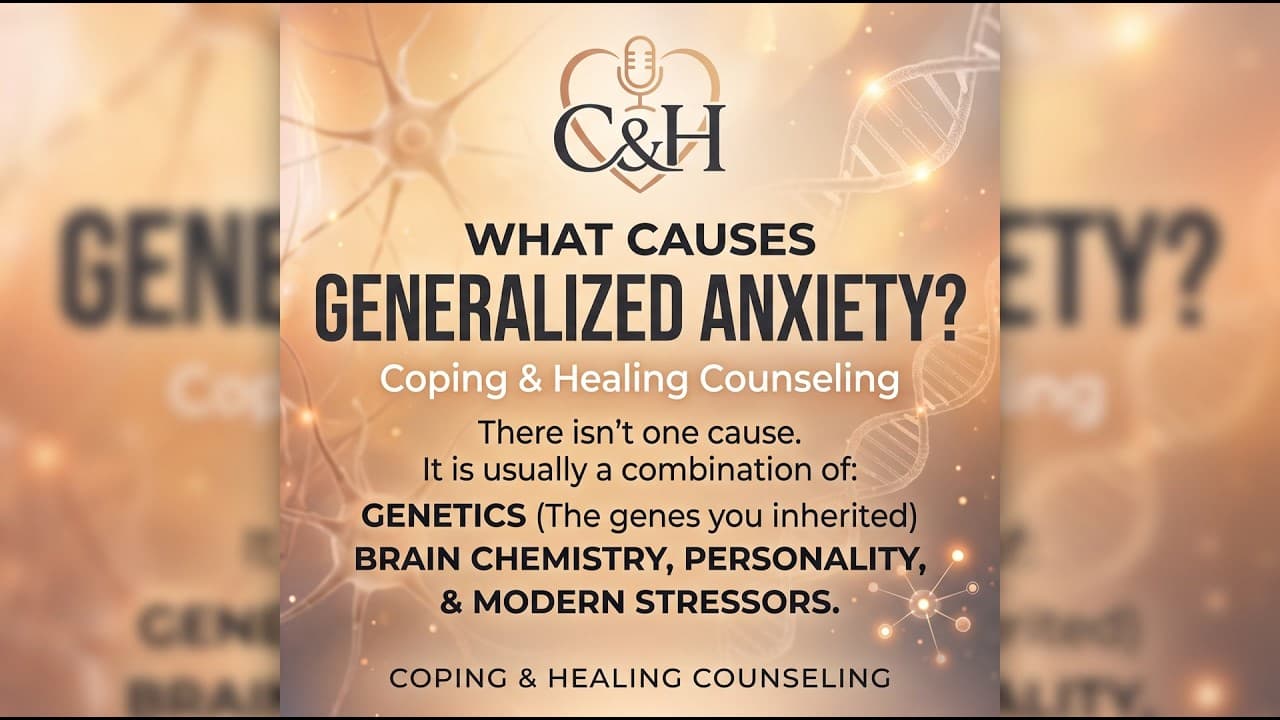
What causes generalized anxiety? — Full Episode | Georgia Telehealth Therapy
What causes generalized anxiety?
What are the 5 symptoms of major depressive disorder? — Full Episode | Georgia Telehealth Therapy
What are the 5 symptoms of major depressive disorder?

RSD and ADHD: Why One Short Text Can Wreck Your Whole Day | Georgia Telehealth Therapy
This one is for the friend who apologizes three times in a single text.
If this resonated, we have therapists who can help.
15+ licensed therapists, all 159 Georgia counties, telehealth-only. Medicaid covered at $0 copay.
Book a free consultation