
Quick education for Friday: bipolar... | Georgia Telehealth Therapy
In this episode
Quick education for Friday: bipolar disorder isn't two extremes — it's a spectrum (Bipolar I, Bipolar II, cyclothymia). Many high-functioning people live successful, stable lives with the right treatment combo (usually mood stabilizer + therapy). But getting the right diagnosis is everything. Free 2
Generated from Coping & Healing Counseling: Accessible Telehealth for Georgia
#CopingAndHealing #GeorgiaTherapy #Telehealth #MentalHealth #Podcast
Transcript
Imagine um going to the doctor desperate for relief from severe depression. You're exhausted. You're just at the end of your rope and they hand you a pill. Right. Right. A standard anti-depressant. Exactly. A standard anti-depressant that's designed to help save your life. But within weeks, you haven't just failed to get better. Your brain has been thrown into this like catastrophic agitated overdrive. Yes. Terrible. You can't sleep. Your thoughts are racing. and you feel like you're jumping out of your skin. And today we are diving deep into this exact phenomenon. It's known clinically as the anti-depressant masquerade. It is such a crucial topic. It really is. And we're exploring this fascinating shift in clinical protocols coming
out of a practice in Georgia called Coping and Healing Counseling or CHC. We've got a whole clinical and operational overview from them which is incredibly eye opening honestly. Right. Their mission and really the mission of our deep dive today is to unpack the hidden complexities of treating bipolar disorder because there is this razor thin line between helping and harming when treating recurrent depression. Oh, absolutely. It's basically like putting the wrong type of fuel into a high performance engine. It doesn't just, you know, fail to run. It actively damages the entire system. That is a perfect analogy because what the clinical data from CHC reveals is that treating what looks like standard depression can sometimes trigger
a severe hidden underlying condition. Wow. Yeah. We are looking at a model that sounds a massive alarm on a widely overlooked risk. Specifically pairing standard anti-depressants with undiagnosed bipolar disorder. So it basically challenges the default assumptions that general practitioners make like every single day. Every single day. And to understand why those assumptions are so dangerous, we um we first have to completely dismantle how pop culture has trained us to view bipolar disorder. Oh, for sure. When you hear the word bipolar, you usually picture this extreme monolithic stereotype. Right. Exactly. The violence swings from utter despair to grandiose destructive mania. Right. But the clinical reality paints a much more nuanced picture. Based on the source material,
bipolar disorder exists on a highly variable spectrum. Yes. specifically bipolar, bipolar 2, and psychothermia. And what really stands out to me is how distinct bipolar I and two are from each other. Like my mental image was just a single volume knob of extreme highs and lows. That's how most people see it. But it's not. It's more like a complex soundboard of different frequencies. And crucially, there are so many high functioning people walking around with this condition living completely successful, stable lives, right? And that nuance is the absolute foundation of effective care. For decades, the public perception has been incredibly narrow, just focusing on the extremes. Exactly. You have bipolar one, which does often involve those
severe, highly disruptive, manic episodes that require immediate intervention. But then you have bipolar 2. And that's where it gets tricky, right? Very, because bipolar 2 involves deep depressive episodes, but the upward swings are much milder. They're these periods of elevated mood and energy known as hypomomania. Okay, wait. Hypomomania. Let's focus on that for a second. Sure. Because I think that's where the confusion really starts. If someone has spent months in this like crushing depression and suddenly they shift into hypomomania, they have a bit more energy. They need less sleep. They're highly productive at work. They're feeling great. Right. Yeah. They probably don't view that as a symptom of a mental illness. They probably just think,
"Wow, I'm finally having a good week." Precisely. And that is exactly why it goes undiagnosed. Patients don't go to their doctor and complain about feeling energetic and productive. Obviously not. They only go to the doctor when the depression returns. So the physician only ever sees one side of the coin. So if they present so differently, like if bipolar one is this massive disruption and bipolar 2 can just look like a productive week followed by a crash, why do people group them together? And why does getting the exact right label dictate the rest of their life? Well, they're grouped together because neurobiologically they share a fundamental instability in how the brain regulates its baseline state. But
the exact label matters because the label dictates the medication. The what is the spectrum, but the why it matters is that an imprecise diagnosis completely removes the possibility of a stable life because it leads to the wrong treatment. And this brings us right to the core of the danger zone, doesn't it? It does. Looking at the clinical warnings from CHC, there is this massive pre-prescriber note directed at doctors. It warns that giving an anti-depressant for recurrent depression without checking for bipolar 2 first carries a major risk of treatment induced mania. Yes. And we need to be very clear about what treatment induced mania looks like because it is not just a slight shift in mood.
It manifests dangerously and rapidly, usually as severe irritability, extreme internal agitation, and massive sleep disruption. Okay, let's get into the mechanics of this because you go to the doctor for depression, you take a pill to feel better, and suddenly you can't sleep, and you're agitated. Yeah, it completely backfires. It reminds me of the engine analogy. Or even think about trying to fix a flat tire by just blasting it with high pressure air without checking the structural integrity of the rubber. Oh, that's good. Right. In a normal tire, the air goes in, it inflates, you drive away. But if there's a weak spot in the sidewall, which is the underlying bipolar condition, that high pressure doesn't
inflate the tire. It causes a violent blowout. That is a highly accurate way to visualize it. Because if you look at the biological mechanism, standard anti-depressants, particularly SSRIs, work by blocking the reabsorption of serotonin. Okay. So, keeping more of it in the brain. Exactly. keeping that neurotransmitter swimming in the synaxes for a longer period. In a standard unipolar depressed brain, this slow accumulation gradually lifts the fog. It gets you back to normal, right? But a bipolar brain operates on a fundamentally different neurobiological framework. It's already hyperreactive. So, the system is structurally volatile from the start. Yes. So when you flood that specific system with serotonin and you don't use a mood stabilizer to anchor it,
you don't just gently lift the mood. You ignite a chemical wildfire. Wow. The brain overshoots the baseline of normal and gets rocketed straight into a manic or hypomomanic state. And the CFC protocol uses a very specific word for how this looks in the doctor's office. They call it a masquerade. The anti-depressant masquerade. Yeah. Right. They warn that this massive neurochemical blowout can actually masquerade as the medication simply activating in the patient's system. But wait, how does a medical professional mistake treatment induced mania for the medication just starting to work? Well, that's the exact clinical trap. You have to remember the timeline of these medications. Yeah, SSRIs take anywhere from four to six weeks to fully
build up. Okay. But in the first week or two, as the brain chemistry is abruptly shifting, patients routinely experience side effects. A very common one is a feeling of jitteriness or activation. Kind of like having way too much coffee on an empty stomach. Exactly. So the doctor prescribes the pill, tells the patient to expect a little jitteriness, and sends them home. And a week later, the patient calls in a panic, saying, "I can't sleep. I'm crawling out of my skin." And if the doctor thinks it's just standard depression, they look at those symptoms and say, "That's just the medication activating. Write it out. It will settle down in a week." Oh, no. But if they
actually have undiagnosed bipolar, too. And that agitation isn't a temporary side effect. It's the leading edge of a severe manic episode that the anti-depressant actively triggered. By telling them to write it out, they are literally telling them to keep pouring gasoline on the fire. Precisely. The overlapping symptoms create an incredibly dangerous illusion for the prescriber. The wrong meds can actively make it worse. So, if standard anti-depressants are the high pressure air causing the blowout, what is the actual biological fix? Because these patients still need help for their crushing depression, right? They do. The clinical data points to a very specific evidence-based approach for the bipolar spectrum. It's referred to as the gold standard of care.
And what does that entail? It is the careful combination of mood stabilizers paired with therapeutic support. How does a mood stabilizer actually alter that chemical wildfire differently than an SSRI? Well, instead of just flooding the synapses with serotonin to force the mood upward, mood stabilizers work on different neurotransmitter systems to regulate electrical activity. Okay, so going back to our tire analogy, they reinforce the sidewall of the tire. They bring the floor up so you aren't dropping into profound depression. But crucially, they bring the ceiling down. They create a biochemical anchor. They stop the brain from rocketing into mania. Exactly. But I mean, to deploy that gold standard, the doctor has to know they were dealing
with bipolar in the first place. Uh-uh. Which brings us to the safeguard. Yes. The screening process. And when I first looked at how CAC identifies this risk, what shocked me most was how aggressively low tech it is. 2 minutes. We were talking about preventing a severe lifealtering manic reaction. And the safeguard is a free twominute NBQ style screener. It's beautifully simple. I just kept thinking, why wouldn't this be mandatory everywhere? It absolutely should be. The protocol dictates that to ensure patients don't get thrown into treatment induced mania. This simple bipolar screening should be a standard adjunct to absolutely any adult depression workup. And CHC even provides this for free on their site, right at chiefcapy.com.
Comment mental health tests. Yes, they do. It's an MDQ style screener which stands for mood disorder questionnaire. And the elegance of the MDQ is entirely based on the psychology of memory and mood states. Oh, so think about a standard medical intake form for depression. The questions are almost exclusively anchored in the present tense. Like over the last two weeks, how often have you felt hopeless? Right. Because depression screams at you in the present tense. It demands all your attention right now. Exactly. But hypomomania, as we discussed, doesn't register as a crisis. It feels like a productive memory. The MDQs, was there a time when you were so unusually irritable that you started arguments with strangers?
It bypasses the current crisis to check the structural integrity of their baseline history. Yes. And if that two-minute screener flags a history of those hypomomanic blips, the doctor instantly has the data to pivot away from the SSRI and shift to the gold standard. It is wildly simple. But okay, let's address the elephant in the room here. Having the perfect clinical protocol is completely useless if a patient has to wait 6 months and drive 3 hours just to get an appointment to take that test. Oh, absolutely. Knowledge is useless without access, right? So, how is CHC actually delivering this care on the ground? Because looking at their structure, they seem designed to attack those exact barriers
to entry. They are the operational structure is just as vital as the neurochemistry. First off, they operate on a 100% telealth IPA compliant model. They serve all 159 counties in the state of Georgia. They aren't just treating the psychological condition. They're treating the logistical friction of getting help. And logistical friction is the silent killer of mental healthare. When someone is severely depressed, the friction of taking time off work or driving 45 minutes can be insurmountable. Totally. By utilizing a telealth model, you functionally erase the geographical barrier. And then there's the financial friction. The CHC model is fascinating here. They accept commercial insurance, Etna, Sigma, Blue Cross Blue Shield, United Healthcare, Humanana, and the sessions run
about $25 to $40 which is very accessible. But the kicker is their approach to Medicaid. Medicaid carries a Z co-pay. A Z Medicaid copay combined with teleaalth for all 159 counties means your zip code doesn't dictate your mental health. It's incredible. And we have to tie that operational structure directly back to the clinical gold standard. Right? The mood stabilizers plus therapy because medication is only half the battle. You need the therapy to rebuild the mental architecture. And CHC has a diverse team of over 15 licensed therapists to handle this. I noticed they specifically highlight LCSWS, LPC's, and LMFTs. Why that specific mix? What does that diversity in training actually achieve for the patient? It provides
a comprehensive safety net. A marriage and family therapist and LMFT will approach collateral damage differently than a clinical social worker, an LCSW who focuses on systemic stressors. Oh, I see. Furthermore, they emphasize cultural competency across this team, which is huge. It is a clinical necessity. If a patient logs onto a screen and feels misunderstood because of their cultural background, the therapeutic alliance never forms. And if that alliance doesn't form, the patient drops out and that whole gold standard of care collapses. Exactly. So having that diverse licensed team available via a high pay compliance screen completes the successful treatment combo. And it goes beyond bipolar, too, right? They specialize in anxiety, trauma, PTSD, and other mood
disorders. Oh, and for those taking notes, they can be reached at 4048320102 for referrals. It really represents a necessary maturation in our healthcare infrastructure. It does. Yeah. Let's briefly recap the journey we've been on today. We started by recognizing bipolar as a spectrum, not a stereotype. Right. We unpacked the severe danger of the anti-depressant masquerade where the wrong meds cause treatment induced mania. We look at the elegance of the two-minute MDQ screener. The vital gateway to the gold standard. Exactly. And the massive value of accessible statewide teleaalth care like CHD in Georgia. Yeah. I want to speak directly to you the listener for a moment. Whether you're a clinician, someone seeking help, or just a
curious learner, understanding these diagnostic nuances is empowering. It really is because knowing that the right questions can unlock stability fundamentally changes how we advocate for ourselves. Yeah. And that leads to one final thought I want to leave you with today to maul over. Go for it. We have spent this time marveling at the fact that a free twominute MDQ screener can fundamentally alter the trajectory of someone's mental health. It prevents treatment induced mania. So it forces us to ask what other standard medical protocols in our health care system are currently missing a critical two-minute check that could change absolutely everything. Wow, that is a profound question to leave on because if we aren't taking the
2 minutes to check the systems structural integrity before we intervene, we aren't truly healing. Thanks for joining us on this deep dive. Stay curious and we will catch you next time.
More episodes
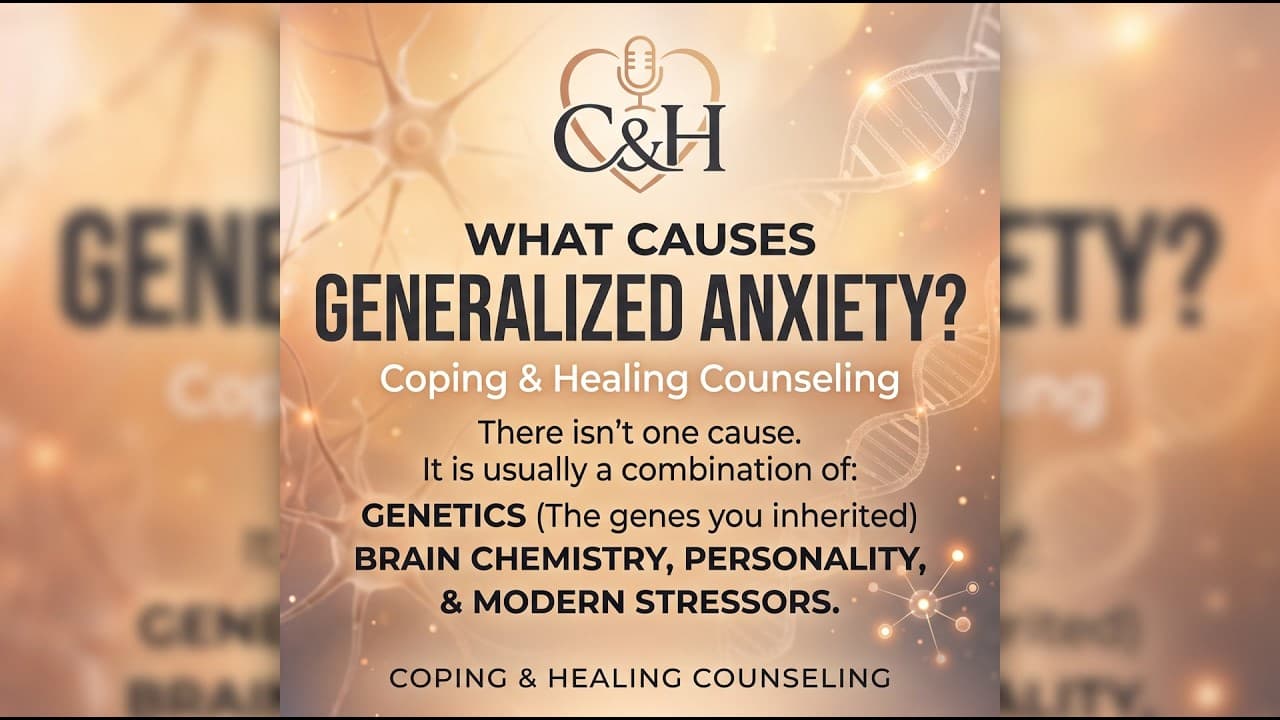
What causes generalized anxiety? — Full Episode | Georgia Telehealth Therapy
What causes generalized anxiety?
What are the 5 symptoms of major depressive disorder? — Full Episode | Georgia Telehealth Therapy
What are the 5 symptoms of major depressive disorder?

RSD and ADHD: Why One Short Text Can Wreck Your Whole Day | Georgia Telehealth Therapy
This one is for the friend who apologizes three times in a single text.
If this resonated, we have therapists who can help.
15+ licensed therapists, all 159 Georgia counties, telehealth-only. Medicaid covered at $0 copay.
Book a free consultation