
Parents, this is worth knowing | Georgia Telehealth Therapy
In this episode
Parents, this is worth knowing.
Anxiety in kids doesn't always look like anxiety. Sometimes it looks like:
→ Stomach aches every morning before school → A meltdown because you cut their sandwich wrong → Refusing to go to a birthday party they were excited about → Erasing and rewriting homework unt
Transcript
What if I told you that the kid throwing an absolute just window rattling tantrum over the Wong brand of peanut butter like a total meltdown? What if they aren't actually misbehaving at all? Right. I mean, it completely looks like bad behavior to anyone watching. Yeah, exactly. But what if neurologically speaking, you aren't looking at defiance, but rather uh a tiny human having a full-blown panic attack? Well, the visual of a child screaming about a sandwich is universally understood as difficult behavior, you know, but when you look at it through the lens of nervous system dysregulation, the entire paradigm shifts. It really does change everything. Absolutely. We are so conditioned to read these moments as character
flaws or um boundary pushing that we completely miss the physiological storm happening underneath. Welcome to the deep dive. I'm so thrilled to have you joining us today because our mission is to decode a hidden language. A language that is spoken in almost every household honestly. Yeah. Yet one that parents often completely miss. We are talking about the hidden highly disguised signs of anxiety in children. And to help us navigate this, we are grounding our discussion today in some incredible clinical insights. Really fascinating practice details. Yeah. Right. from Coping and Healing Counseling, also known as CHC. They're a teleaalth therapy practice serving um all 159 counties in Georgia. And the data they've shared gives us this
amazing look under the hood of what is really happening with our kids' mental health. It does because the clinical observations from CHC highlight something crucial for anyone, you know, interacting with children, which is that childhood anxiety is an absolute master of disguise. So, what does this all mean? It means the core premise we're exploring today is that child anxiety rarely looks like classic adult worry. Right. Unlike an adult who can sit on a couch and uh articulate a profound sense of existential dread about their mortgage or their career. Yeah, exactly. A child's distress simply does not look like distress. It bars the close of other more familiar childhood issues. It masquerades as bad behavior. It
masquerades as laziness. or very frequently it shows up as physical illness. And we have to start by looking at how this anxiety manifests in the real world embedded in the completely chaotic daily routine of family life, right? Because if we don't know what it looks like, we are essentially trying to solve a puzzle in the dark. For sure. So, let's talk about the physical symptoms first because this feels like a massive blind spot for a lot of parents. Oh, absolutely. We're talking about frequent stomach aches or headaches. And the timing here is a dead giveaway. The timing is everything. Picture this, right? It's 7.15 a.m. on a Tuesday. Backpacks are by the door, shoes are
missing, and suddenly the child is doubled over with a stomach ache, right? This isn't a random Saturday afternoon ache. No, this is the classic school morning symptom. Yeah. The gastrointestinal complaint is one of the most common early indicators, but it extends into significant behavioral shifts that parents might initially just brush off as a phase. Like what kind of shifts? Well, a child who previously slept through the night in their own room might suddenly refuse to sleep alone. Oh, like showing up at the parents bedside at 2 a.m. Exactly. Or they might start having recurring nightmares. You also see them quietly withdrawing from activities they used to really love. So suddenly they're finding excuses to skip
a best friend's birthday party, right? Or they're refusing to go to soccer practice. And that's often paired with a sudden intense clinginess at drop offs that feels almost regressive. Wow. And then there are the reactions that just seem to come completely out of left field. You know, the disproportionate meltdowns. Oh, the meltdown. We are talking about a fullblown catastrophic event because a different parent is driving the carpool today or because their toast is cut into squares instead of triangles. Yes. To the adult in the room, it feels completely irrational. You're standing there holding the toast thinking like, "Are you kidding me?" Right. But it's not just the external explosions. Perfectionism is a major red flag,
too. Oh, like kids redoing their homework multiple times. Yes. Erasing a single misspelled word. so intensely with so much physical tension that the eraser actually teared right through the paper. What's fascinating here is that the torn paper and the carpool meltdown, they actually stem from the exact same route. They do. Yet, parents naturally misread these signs often because they are simply trying to survive the morning rush, which is totally fair. I mean, mornings are chaotic. Absolutely. So they interpret the school refusal as laziness, the toast meltdown as disobedience, and the torn homework as just a kid trying to do a really good job. They react to the surface symptom, completely missing the underlying distress. I
was thinking about this and it feels like treating these symptoms as just bad behavior. It's exactly like ignoring your car's check engine light because you assume the dashboard is just trying to annoy you. That is a perfect way to look at it, right? like you're getting mad at the little red light, but the behavior is just an indicator. It's a signal that there is a deeper system issue under the hood that requires maintenance. Taking that analogy further, if you just put tape over the check engine light, the engine still fails eventually. Wow. Yeah, it really does. Which brings us to the biology of the breakdown. We need to move from identifying the symptoms to understanding
why they happen. Why does a child tear the paper instead of just looking at their mom and saying, "Hey, I am feeling a lot of performance anxiety about this math worksheet?" Because they lack the vocabulary. They literally don't possess words like overwhelmed, inadequate, or dysregulated. Okay, let's unpack this because I really want to push back for the parents listening who might be feeling a bit skeptical right now. Sure, let's hear it. Isn't a tantrum over a sandwich sometimes just a kid being a bratty kid? I mean, children push boundaries all the time. They absolutely do, right? So, how is a parent supposed to differentiate everyday run-of-the-mill moodiness or boundary testing from an amydala hijack that
requires clinical attention? That's the million-dollar question. Like, if I treat every meltdown as a nervous system crisis, aren't I just spoiling them? Well, distinguishing between a behavioral issue and a nervous system response requires looking at the trajectory of the meltdown. The trajectory. Okay. Yeah. A child who is simply testing boundaries will typically deescalate if they are given a firm limit or if they are distracted. So they might pout, but they get over it, right? They recover their baseline relatively quickly. But a child in a state of nervous system dysregulation cannot just snap out of it. Interesting. Their reaction is wildly oversized for the situation. And the crucial piece is the recovery time. It takes them
a significantly long time to calm down because their body is literally courarssing with adrenaline. Wow. And what about those stomach aches? Are they just faking it to get out of a test? No. And this is so important. Those are biologically real. Really? Yes. When the fight orflight system activates, the body pulls blood away from the digestive tract to send it to the muscles for running or fighting. The blood literally leaves the stomach. Exactly. That diversion of blood flow causes actual cramping and nausea. They aren't faking it. Their anxiety is manifesting as genuine physical discomfort. Wow. So, when a parent dismisses it as a fake ache, they are basically telling the kid that their physical reality
isn't real, which is incredibly confusing for a child. So, the behavior literally becomes their language. The tantrum is the sentence. The stomach cramp is the cry for help. Yes. And when parents make that cognitive shift, seeing this specific type of disproportionate behavior as a desperate call for support rather than an intentional provocation, everything changes. The entire dynamic of the household changes. Precisely. You aren't spoiling a child by recognizing their nervous system is overwhelmed. You are throwing them a lifeline. Going from my child is giving me a hard time to my child is having a hard time is a massive paradigm shift. It really is. So now that we understand the biology and we recognize this
behavior as a physical language, how exactly should a parent respond in the heat of the moment? Well, the clinical materials from CHC outline a deeply practical playbook for course correction. Okay, what's step one? The very first step is often the most counterintuitive for a busy parent. You have to validate first. Validate the irrational fear. Yes. Before you try to fix a problem, before you rush them out the door, you must validate the feeling. You get down on their level and say, "It sounds like your tummy really hurts today. That must feel really uncomfortable and scary." You know, I was thinking about how hard it is to validate a fear, you know, isn't a real threat.
But dismissing it is like telling someone who is drowning that the water isn't actually that deep. Oh, that's exactly what it's like. Sure, maybe the water's only 3 ft deep, but if they don't know how to put their feet down and stand up, they are still struggling. Exactly. Telling them the factual depth of the water doesn't change their physical reality of feeling like they are going under. That analogy perfectly illustrates the danger of skipping to the second crucial guideline, which is to avoid dismissing. Right? So, don't just tell them they're fine. Never. Telling a disregulated child, you're fine. There's nothing to be afraid of. Just get in the car. might force compliance in the short
term, but it actively invalidates the very real physical alarms their body is sounding. It teaches them not to trust their own internal gauge. Exactly. You have to help them stand up in that 3 ft of water first. Which leads right into how we create the ground for them to stand on. Creating predictable routines. Yes. An anxious child's internal world feels profoundly chaotic because they feel out of control internally. Their external world needs to be incredibly structured to compensate. So they need to know exactly what's coming next. Right? When a child knows first we eat breakfast, then we brush teeth, then we put on shoes, it drastically reduces their cognitive load. The brain doesn't have to
scan the environment for threats or surprises. Exactly. Which allows the nervous system to remain closer to a resting state. And part of controlling that external environment means limiting media. Right. That was another major recommendation. A huge one. Yes. Yeah. shielding them from overexposure to overwhelming news or adult conversations. Kids are like sponges for ambient anxiety. They absolutely are. They absorb the stress of the world around them, even if they aren't directly watching the news broadcast. So, if the adults in the house are tense about politics or the economy, the mirror neurons in the child's brain pick up on that frequency and adopt the stress as their own. Wow. We cannot expect a child to self-regulate
in an environment buzzing with unmanaged adult anxiety. No, we really can't. However, even with perfect routines and validation, there is a clear threshold where professional intervention becomes necessary. And when is that? You step in with a licensed therapist trained in child anxiety when these symptoms persist consistently for more than 2 to 3 weeks. 2 to 3 weeks. Yes. Or the moment they begin interfering with the child's sleep, their ability to attend school, or their friendships. So that 2 to 3 week mark is the clinical indicator that the child is stuck in a disregulated state. Exactly. It's not just a passing developmental phase anymore. And that 2 to 3 week mark brings us directly to a
massive roadblock for most families. Logistics. Yeah. Getting a kid to a therapist's office in the middle of a Tuesday afternoon is a nightmare. It really is. You have to leave work, pull the kid out of school, sit in traffic, sit in a waiting room, and then drive back. For a lot of working families, especially in rural areas, that barrier is so high, it basically prevents care altogether. The logistics of traditional mental health care have historically gatekept treatment from the families who need it most. Totally. And this is exactly the systemic barrier that coping and healing counseling has dismantled. CHC, right? Yes. They have built a diverse, culturally competent team of over 15 licensed therapists. And
we're talking licensed clinical social workers, licensed professional counselors, and licensed marriage and family therapists, right? Highly qualified professionals. And the entire practice operates on a 100% teaalth IPA compliant model. And because it's teleaalth, they cover all 159 counties in Georgia. I read that and literally couldn't believe it. It's revolutionary, especially for families living in areas where finding a pediatric anxiety specialist within a 2-hour drive is nearly impossible. And they offer individual, couples, family, and teen therapy for kids 13 and older, plus life coaching. Yes. And their specialties align perfectly with what we are discussing today. Anxiety, depression, trauma, PTSD, grief, and relationship stress. And they are utilizing evidence-based approaches, right, like cognitive behavioral therapy, play-based
techniques, and family systems therapy. Exactly. Now, for teens 13 and up, they work directly with the adolescent. But for the younger kids, they do something fascinating. Oh, the parent focused sessions. Yes. They actively equip the parents with the tools to be the intervention at home. Providing the clinical tools directly to the parents creates a therapeutic environment that operates 24 hours a day rather than just 45 minutes a week. It's so much more effective. Yeah. And we must discuss the financial accessibility, which is just as vital as the geographic accessibility, right? Because therapy can be incredibly expensive. But CHC accepts Georgia Medicaid at a $0 co-pay. Wow. Z. Yes. They also take Etna, Sigma, Blue Cross
Blue Shield, United Healthcare, and Humanana with sessions typically costing working families between $10 and $40 out of pocket. That is incredibly accessible. It really is. By calling 4048320102 or visiting cheat theapy.com, a family can initiate care without navigating an impossible financial or logistical maze. They can also email support at cheater theapy.com. Right. Yes, exactly. Here's where it gets really interesting, though. When I first looked at this, I had a major question. Okay. What was it? Why tellahalth for kids? I completely understand it for adults. We log on, we sit, we talk about our feelings, but doesn't a child therapist need to be physically in the room with the kid? That's a very common question. Like,
don't they need to sit on the floor, play with blocks, and observe their physical ticks in a clinical setting to truly understand what's going on? If we connect this to the bigger picture of how anxiety functions, the answer to that completely flips the traditional script. Really, how so? Yes, traditional play therapy relies on the clinic space, but the unique profound advantage of CHC's teleaalth model is the environment itself. The session happens from the child's own home. Oh, I see. Think about a traditional clinical setting. It is inherently sterile and unfamiliar. You take an already anxious child, put them in a strange car, drive them to a strange office, and ask them to interact with a
strange adult. Their immediate nervous system response is going to be to mask their behavior. Exactly. They shut down. But on a screen, sitting on their own bed, surrounded by their own toys, with their own dog sleeping on the floor, the defensive walls are completely lowered. Exactly. The authenticity of the behavior observed in a telealth session allows the therapist to make much faster, far more accurate assessments. That makes so much sense. you are actually getting a vastly more accurate read on the child's baseline behavior because they aren't terrified of the waiting room, right? The child feels safe, which means the therapist gets to see the real child, not the highly defended, anxious version of the child.
So, we know how to spot the hidden signs. We understand the biology of the amydala hijack. We have the playbook for validation. And we know incredible resources like CHC exist to solve the access problem. We have all the pieces, but we have to look at the consequences of inaction. Why shouldn't a parent just wait and see if the child simply grows out of this phase? What is the actual tangible cost of doing nothing? The most dangerous myth in child psychology is the idea that they will simply grow out of it. They don't just grow out of it. No. Untreated childhood anxiety does not vanish. It mutates. It mutates. A child who learns that their overwhelming
anxiety is something to be hidden or that their physical symptoms will be repeatedly dismissed carries that disregulation straight into adolescence. So, it gets worse, much worse. Untreated child anxiety is one of the strongest predictors for severe adolescent depression. That is heavy. It frequently turns into chronic school refusal where a teenager's nervous system is so overwhelmed they physically cannot leave the house. And what about when they become adults? It paves the way for lifelong chronic sematic symptoms. We see countless adults who suffer from debilitating migraines, chronic fatigue, or severe gastrointestinal issues simply because their adult body is still carrying the physiological stress that their childhood voice was never taught to express. The check engine light stays
on until the engine finally gives out. That's exactly it. But the source material provides a massive amount of hope to counter that heavy reality. Because as much as the stakes are high, the science is clear. Kids are incredibly resilient. They are beautifully resilient because their brains are highly neuroplastic. Neuroplastic meaning they can change and adapt. Exactly. They are quite literally designed to learn, rewire, and adapt with the right early intervention and support. They can learn to map their physical sensations to emotional words. They can learn actionable tools to regulate their own nervous system like deep breathing or grounding exercises. Yes. which builds a foundation of lifelong confidence. So the message to parents in Georgia is
simple. Do not wait for a full-blown structural crisis to reach out to a resource like CHC. You intervene when the symptoms first appear. This raises an important question about the true lasting value of therapy. Right? Early intervention isn't just a strategy for stopping tantrums. It isn't just a hack to make the morning routine smoother for the parents. Although getting out the door without tears is a wonderful byproduct, definitely a nice bonus. But fundamentally, it is about giving a human being the essential tools for lifelong emotional survival. Think about your own resilience for a moment. Think about how you handle stress today. Whether it's a looming deadline at work or a conflict in your relationship. It's
so true. We all face it. How much easier would your life be right now if someone had taught you how to actively regulate your nervous system when you were 10 years old? By catching this early, you're actively intercepting a trajectory of unnecessary suffering and replacing it with a trajectory of profound self-awareness. It's about changing the entire arc of their life before it solidifies. Exactly. Let's recap the journey we've been on today. Child anxiety is a master of disguise. It hides in school morning stomach aches. It hides in intensely erased homework. And it hides in disproportionate meltdowns over sandwiches. It does this because the child's nervous system is screaming loudly long before their cognitive emotional vocabulary
has had a chance to catch up, right? But by understanding that biology, stopping to validate those feelings instead of dismissing them, creating predictable routines and utilizing incredibly accessible teleaalth resources like coping and healing counseling, parents have the power to translate that behavior and change everything. By learning their hidden language, we stop fighting the behavior and we start truly supporting the child. That's the ultimate goal. You know, as we are wrapping this up and talking about children lacking emotional vocabulary, uh it hits me. We do this, too, don't we? Adults. Oh, absolutely. Yeah. We've established that kids substitute behavior for the words they lack. They tear the paper. They scream about the toast. But what about
us? That's a really provocative thought. Are there areas in our own adult lives where we are acting out our stress simply because we too have temporarily lost touch with our emotional vocabulary? I mean, think about road rage. Exactly. When we engage in absolute road rage on the highway over a minor slight or when we overwork ourselves to the point of complete physical burnout or snapping at a spouse isolating from friends. Yeah. Are we just adults having a wrong sandwich meltdown? Are we just pacing around waiting for someone to notice that our check engine light is glaringly on? The mechanisms of the nervous system do not disappear just because we get taller and pay mortgages. The
need for emotional translation is lifelong. Wow. Something to ponder as you go about your day. Check your own dashboard. Yeah. Thank you so much for joining you uh joining us on this deep dive into the hidden language of anxiety. We will catch you next time.
More episodes
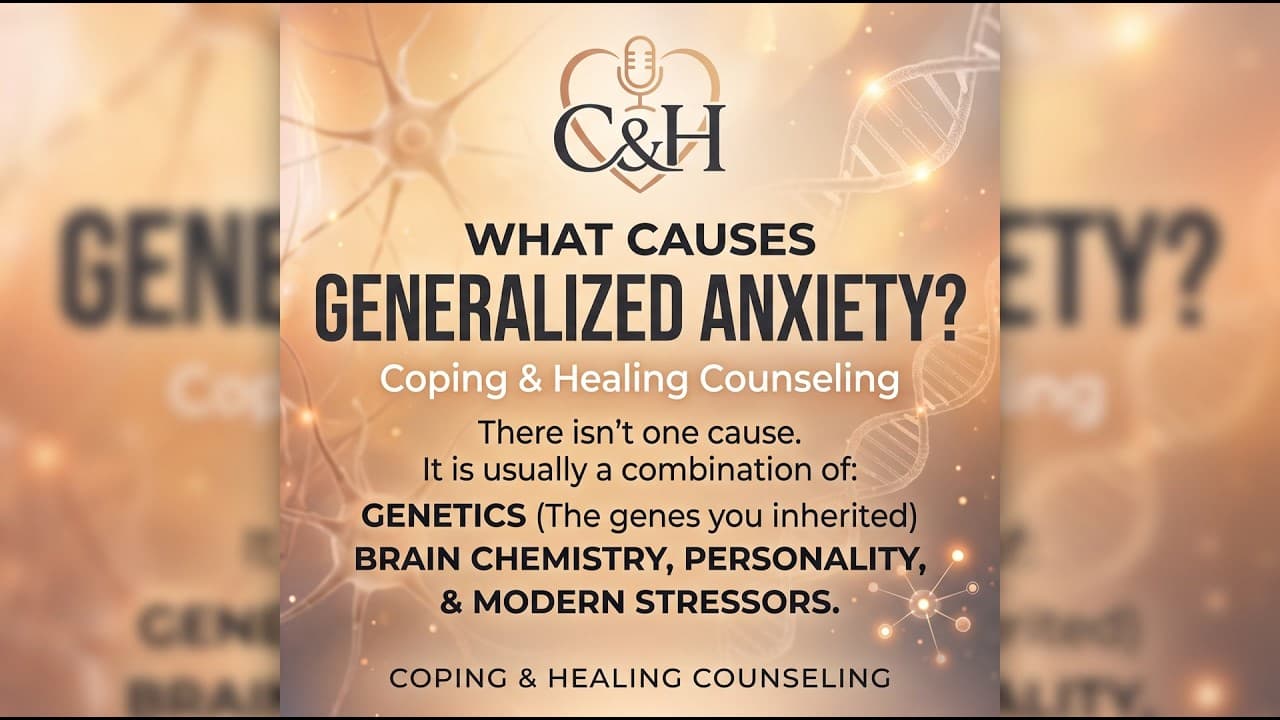
What causes generalized anxiety? — Full Episode | Georgia Telehealth Therapy
What causes generalized anxiety?
What are the 5 symptoms of major depressive disorder? — Full Episode | Georgia Telehealth Therapy
What are the 5 symptoms of major depressive disorder?

RSD and ADHD: Why One Short Text Can Wreck Your Whole Day | Georgia Telehealth Therapy
This one is for the friend who apologizes three times in a single text.
If this resonated, we have therapists who can help.
15+ licensed therapists, all 159 Georgia counties, telehealth-only. Medicaid covered at $0 copay.
Book a free consultation