
If someone you love can't part with... | Georgia Telehealth Therapy
In this episode
If someone you love can't part with things — to the point where rooms can't be used, relationships strain, and shame keeps the door closed to visitors — please know this isn't laziness or "being messy." Hoarding Disorder is a recognized mental health condition involving genuine distress at discardin
Generated from Coping & Healing Counseling: Accessible Telehealth for Georgia
#CopingAndHealing #GeorgiaTherapy #Telehealth #MentalHealth #Podcast
Transcript
Imagine you're uh holding a piece of junk mail, like a completely useless expired coupon from a grocery store you don't even go to. Right. Something most of us would just toss without thinking. Exactly. But imagine feeling the exact same level of sheer chest tightening panic holding that coupon that you would feel if someone told you to throw away, I don't know, your child's birth certificate. Yeah. Or your passport. Just absolute terror. Yeah. And for millions of people, that broken internal filter isn't just some weird quirk. It is a paralyzing medical reality. And you know the panic you're describing right there, that is probably the single most misunderstood element of what we're looking at today. Oh,
for sure. Because society just treats that level of attachment to an expired coupon as a punchline. I mean, we've engineered an entire genre of reality television around it. We really have. just focusing on the spectacle of the physical objects and completely ignoring the profoundly complex internal psychological war that's actually happening inside the person's mind. Well, we are going to strip all of that spectacle away today. Our mission for this deep dive is to look way past the dramatic music and you know the blurred out faces to really understand the clinical facts of hoarding disorder which is so desperately needed. Right? And to do this, we're pulling from clinical materials provided by coping and healing counseling.
They're also known as CHC, which is a teaalth therapy practice serving the entire state of Georgia. A really great resource. Yeah. And based on their treatment framework, we are going completely under the hood today. We want to understand the hidden emotional toll of this condition, the systemic barriers that trap people in it, and most importantly, how evidence-based care actually reaches the people who need it most. I think changing the lens from entertainment to empathy is just a vital first step here because as long as society views this condition through a lens of judgment, the individuals who are actually suffering from it, well, they just remain isolated. Yeah, that makes total sense. So to dismantle those
stereotypes, we really have to start with how the medical community defines the condition independent of the clutter itself. Okay, let's unpack this because the CHE clinical materials emphasize right out of the gate that hoarding disorder is a recognized mental health condition. Yes, it is not a moral failing. It is not laziness and it is entirely distinct from simply being messy, right? Because ordinary clutter is a universal human experience. Oh yeah. I mean, you get busy, the mail piles up on the kitchen counter, maybe laundry sits in a basket for a week or two weeks, right? Let's be honest, two weeks. but you eventually clear it out without a second thought. But hoarding disorder is defined
by a persistent difficulty discarding or parting with possessions regardless of their actual monetary value. And that's the thing, the critical phrase in that clinical definition is regardless of monetary value. Right? The behavior is driven by a profound perceived need to save items and they experience genuine distress at the mere thought of letting them go. Wow. So the root of this condition isn't about the physical objects at all. The objects are merely the symptom. Interesting. What's fascinating here is that the core of the disorder is the severe anxiety and the emotional pain that gets triggered by the act of discarding. I mean, I have to be honest, I'm struggling to wrap my head around the perceived
value part of this. It's definitely counterintuitive. Yeah. Because if my house is full of literal trash, at what point does my brain not just look around and say, "Hey, this is garbage." Like, why doesn't the sheer volume of stuff eventually override the anxiety of throwing one single thing away? Well, it's because the brain essentially develops a form of cognitive blindness to the macro environment. Cognitive blindness. Yeah. So, the individual becomes completely habituated to the room as a whole. They don't actually see a mountain of trash. Their focus is hyperfixated on the micro level. Oh, so just a single object in their hand. Exactly. When they pick up that expired coupon, their brain isn't calculating the
volume of the entire room. It's only calculating the perceived future utility or the emotional significance of that one specific piece of paper. That is wild. The anxiety response has basically hijacked their risk assessment software. It's like your brain's spam filter is completely broken. That's a great way to put it. Like imagine your email inbox, but instead of easily deleting the obvious junk emails, your brain flags every single advertisement, every shipping notification as a critically important document that you cannot afford to lose. Yes. I mean, the cognitive load of constantly making those high stakes evaluations. That would be staggering. And the sheer exhaustion of that cognitive load is exactly why the accumulation happens. Oh, because they
just give up, right? It becomes easier to just keep everything than to process the intense emotional distress of constantly evaluating and discarding. That makes a lot of sense. And this mechanism is exactly why modern clinical understanding recognizes hoarding as its own distinct disorder. It's separate from obsessivempulsive disorder or OCD. Wait, that distinction is actually really fascinating because historically, wasn't hoarding just lumped in as a symptom of OCD? It was. Yeah. For a long time. But the underlying drives are very different. How so? Well, in OCD, a compulsion to hoard might be driven by an intrusive thought. Like if I throw away this newspaper, something terrible will happen to my mother. Oh, I see. So, the
hoarding is basically a ritual to prevent harm. Exactly. But in hoarding disorder, the attachment is to the item itself. Ah, the distress is about losing the item, losing the memory attached to it, or feeling like you're wasting something that might be useful someday. Right. Right. So the specific mechanics of that perceived value and the distress surrounding disposal, they really require a very targeted diagnosis by a licensed clinician. But wait, if throwing things away triggers acute anxiety, but the clutter itself is causing massive problems in their daily life, they are basically trapped in a psychological crossfire. They absolutely are. So how does this internal distress actually manifest in their physical environment? Because the CHC materials are
very specific about the difference between like a cluttered space and an unusable space. Yeah, that's a key clinical distinction. The metric of unusable is how clinicians actually measure the severity of the impairment. Okay. So, we aren't talking about having to move a few magazines to sit on the couch. We are talking about spaces that have fundamentally lost their purpose. Like what? Like a kitchen where you physically cannot access the stove or the sink because they are buried under three feet of belongings. Wow. or a bathroom where the tub is used entirely for storage or a bed that just cannot be slept in. And the ripple effects of losing your basic living spaces, I mean, they're
devastating. The sources highlight severe safety impairments, right? Like fire hazards, structural damage from the sheer weight of the items. Yes. Tripping hazards for the elderly. Exactly. But it also obliterates personal relationships and basic daily functioning. You can't invite friends over. If you have dependent or children, you might seriously struggle to keep them safe. And this profound impairment almost never exists in a vacuum. The clinical data shows that hoarding disorder heavily co-occurs with other significant mental health conditions. Like what else? Well, anxiety and depression are incredibly common along with ADHD. Okay, that's interesting. And CHC treats all of these specialties. So if we connect this to the bigger picture and you look at how those specific
conditions interact with hoarding, the systemic trap becomes painfully clear. Let's break down that interaction actually because I understand how anxiety feeds the hoarding, you know, the the fear of discarding, but how do ADHD and depression compound the issue? Well, let's look at the actual mechanics of cleaning a room. Okay, it is heavily reliant on executive functioning. You have to pick up an item, categorize it as keep, donate, or trash. Prioritize what to deal with first and physically sequence the steps. Right. You need a plan. Exactly. And ADHD directly impairs executive functioning. Oh wow. So an individual with ADHD might pick up an old piece of mail, get distracted by the contents, remember a totally related
task they forgot to do, and completely lose the threat of organizing. The mechanics of sorting through items become neurologically overwhelming for them. Yes. So they literally lack the cognitive filing system to process the backlog. Precisely. Now layer depression on top of that. Oh man. Right. Depression saps motivation, physical energy, and hope. Yeah, it really does. If you are deeply depressed, simply getting out of bed is a monumental task. So the idea of tackling a room where the floor hasn't been visible in 5 years, that feels physically impossible. That sounds like a complete nightmare. The anxiety creates the distress of discarding. The ADHD scrambles the ability to categorize. And the depression just drains the energy required
to even attempt the work. It's the perfect storm. Which brings us to the most insidious barrier of all, I think, the deep paralyzing sh. The materials emphasize that this condition carries a level of shame that actively keeps people from seeking help. And you know, people looking from the outside often ask, well, why don't they just ask for help? Right? They say that all the time. Like if they are living like that, why not just call a cleaning service? But if profound shame is the primary emotion, that isn't just a hurdle. That's a massive brick wall. It is because the individual is acutely aware that their living situation is not normal, right? They aren't oblivious. Not
at all. They watch the same reality TV shows the rest of society watches. They know exactly how they are judged. That's how heartbreaking. So they hide. They stop letting friends or family inside their home. They withdraw from social gatherings because they are terrified someone might want to come back to their place afterward. It's a total selfisolation. Exactly. The shame becomes a self-fulfilling cycle that ensures the hoarding continues unabated, hidden from the very people who might actually offer support. I can totally see how that isolation sets the stage for a massive conflict when family members finally do discover the extent of the problem. Oh, the conflict is almost inevitable because a family member's instinct, and usually
this is driven by genuine love and just sheer panic about their relatives safety, their instinct is to take immediate drastic action. They want to swoop in and fix it. The classic tough love approach. Yes, the surprise weekend intervention. Exactly what the clinical materials warn against. The sources are abundantly clear here. Compassion and patience work far better than ultimatums or forced cleanouts. always. But families often think, you know, I'll just rent a dumpster, send my mom to a hotel for the weekend, and clear the house out. Problem solved, which is so common. They think they are fixing the issue because they are removing the physical objects, which fundamentally misunderstands the illness. It really does. Here's where
it gets really interesting. Forced cleanouts are like taking someone with a broken leg and pushing them onto a marathon course. That's a powerful analogy. You haven't healed the underlying anxiety. You've just exposed the raw nerve and taken away their only coping mechanism. That is a highly accurate way to frame it. The problem isn't the stuff. It's the psychological distress. Right? A forced cleanout completely violates the individual sense of safety and autonomy. Yeah, that makes sense. It doesn't teach them how to process the anxiety of discarding. In fact, clinical evidence shows that after a forced cleanout, the hoarding behavior almost always returns. Oh, wow. Really? and often much more aggressively because they're traumatized. Exactly. The individual
has been deeply traumatized by the sudden non-consensual loss of their possessions. So, their brain's response is to hoard even harder to protect against future threats. So, if dumpsters and tough love just cause more trauma, what is the actual path forward here? Well, this raises an important question about how clinicians actually approach this. Okay. The CHC framework points to a highly specialized form of cognitive behavioral therapy or CBT tailored specifically for hoarding. But the materials note this isn't just like standard talk therapy. Right. Right. It's very targeted. It focuses on active skill building things like categorizing, organizing, decisionm and most crucially tolerating the distress of discarding. Ah distress tolerance. Yes. The focus on distress tolerance is
the lynchpin of the entire treatment. The therapist isn't acting as a professional organizer. They're acting as a sort of cognitive physical therapist. Okay, I like that. Slowly rebuilding the specific mental muscles required to make decisions and tolerate emotional discomfort. Give me a tangible example of what that mental workout actually looks like. How does a therapist convince someone to throw away something they perceive as vital? So, let's say the item is a stack of 10-year-old newspapers. Okay. The therapist won't simply say, "Hey, this is old. Throw it away." Because that triggers the panic. Exactly. It triggers the panic response. Instead, they ask, "What is the specific fear of losing this?" And the patient might respond, "Well,
there is an article in there I might need to reference someday." Which feels very real to them, right? So, the therapist then works to gently challenge that distorted belief. They might ask, "If we needed that specific information next year, is there another way we could find it? Could we look it up on the internet?" Oh, I see. They are literally rewiring the brain's risk assessment software in real time. Yes, exactly. They validate the anxiety. They acknowledge that throwing it away feels scary, but they methodically prove that the fear is based on a cognitive distortion. That's brilliant. And then comes the exposure part. Okay. They practice discarding the item. starting with things that carry very low
emotional weight, like maybe a completely blank piece of scrap paper, right? The patient throws it away and the therapist sits with them where the anxiety spikes. They wait for the panic to peak and then naturally subside. So, they're proving to the patient's brain that the anxiety is incredibly uncomfortable, but it's not lethal. Precisely. Over time, as they practice this with slightly more difficult items, the patient builds a tolerance to the distress. They regain control over their emotional responses which eventually allows them to regain control over their environment. The CHC materials also note that this specialized CBT is often coordinated with occupational and social supports. It has to be. Yeah. Because hoarding requires a multi-layered approach.
Like an individual might need life coaching to build new daily routines or even physical assistance to safely navigate the space once the cognitive work actually begins. And we really cannot ignore the impact on the family system here. Oh, definitely. Having access to family therapy or couples therapy alongside the individual CBT is crucial because the spouse or the children living in that environment, they're dealing with their own profound frustration and trauma. Yeah, living in that has got to be incredibly hard. They need support to navigate the situation with compassion rather than falling back into that cycle of arguing and ultimatums. But all of this incredible evidence-based treatment brings us to a massive glaring logistical hurdle. Yep.
If the core feature of this disorder is intense, paralyzing shame that traps a person in an unusable, highly congested home, how do you actually deliver the therapy? Because the patient is likely terrified to let a professional cross their threshold, and their depression or anxiety might prevent them from leaving the house to go to a traditional clinic. It's a classic clinical catch 22. The people who most desperately need a professional to intervene in their home environment are the exact same people whose disorder makes it psychologically impossible to let anyone through the front door. So what does this all mean? The delivery model basically has to adapt to the reality of the patient. And this is where
the teleaalth model utilized by coping and healing counseling fundamentally changes the game. It really does. CHC provides their care via a 100% IPA compliant teleaalth model. By offering therapy through a screen, they bypass the threshold anxiety completely. The screen acts as a safety buffer. The therapist can see the patient, build rapport, and begin the cognitive work without invading the physical space, which is huge for someone with this disorder. Right. Because the patient doesn't have to worry about where the therapist is going to sit or if they are judging the smell or the clutter. Yeah. And then eventually when the trust is built, the patient might use the camera to show the therapist one small corner
of a room on their own terms. It meets the patient exactly where they are, mitigating the shame barrier instantly. And CHC has built a massive infrastructure to support this. The materials outline that they serve all 159 counties in Georgia. That's statewide coverage. Yeah. They employ a diverse, culturally competent team of over 15 licensed therapists, including licensed clinical social workers, licensed professional counselors, and licensed marriage and family therapists. A really robust team. They cover the whole spectrum. Individual therapy, couples and family therapy, teen therapy for ages 13 and up, and life coaching. Offering teen therapy is a particularly vital detail, honestly. Why is that? Well, teenagers living in a hoarding environment often suffer from severe social
isolation. Oh. Because they can't have friends over. Exactly. They might lack a clean space to do homework and they carry this heavy family secret. So providing them with their own therapeutic outlet is an essential part of treating the whole family system. But even with teleaalth and family support, there is always one final excuse the anxiety will use to avoid getting help. The cost. The cost. When someone is already crippled by the shame of their living space, handing them a massive out of network therapy bill is just another reason for them to retreat. Financial access is not just a business perk. It is a clinical necessity. Totally. Because anxiety looks for an out. It looks for
a rationalization to avoid the painful work of treatment and I can't afford it is the easiest out there is. Well, CHC systematically removes that excuse. They're in network with major insurance plans. Etna, Sigma, Blue Cross Blue Shield, United Healthcare, and Humanana. It covers a lot of people. It does. Sessions typically run between $10 and $40. And perhaps most importantly for individuals on Medicaid, they offer a $0 co-pay. That is incredible. By combining a statewide teleaalth model with broad insurance acceptance and a 0 Medicaid option, CHC is dismantling the three biggest structural barriers to mental healthare. Geography, cost, and shame. Exactly. They are clearing the path so the individual has no logistical reason not to engage
in the evidence-based CBT work. For anyone in Georgia listening who recognizes these struggles in themselves or maybe sees them in a loved one, that path is open right now. You can reach CHC at 404832102 or just go online to cheat theapy.com. Their support email is support theapy.com. The infrastructure to get help without judgment is sitting right there. You know, stepping back from the clinical mechanics we've discussed today, the overarching narrative here is deeply hopeful. It really is. We're moving away from the era of gawking at clutter and into an era of structural compassionate intervention. To quickly recap the journey of this deep dive, hoarding disorder is a complex, heavily stigmatized mental health condition. It is
rooted in profound emotional distress and a broken internal mechanism for evaluating risk and value. Right? It's not laziness. Not at all. It often creates a compounding trap with conditions like ADHD and depression, resulting in just paralyzing shame. We know now that aggressive tough love and forced cleanouts are functionally useless and actively harmful. And the only viable path forward is specialized cognitive behavioral therapy that respects the patients autonomy and actively builds their distress tolerance. Yes. And innovations like CHC's teleaalth model are proving that we can deliver this highly specialized care directly into the homes of the people who previously felt entirely shut off from the world. We want you, our listener, to carry these clinical insights
forward. The next time you encounter someone struggling with chronic clutter or, you know, the next time you flip past one of those sensationalized reality shows, try to view the situation through a lens of empathy rather than judgment. Please do look past the physical accumulation and recognize the intense internal distress that is actually driving it because understanding the invisible mechanics of a disorder Yeah. fundamentally shifts how you interact with the people suffering from it. And to help cement that empathy, we want to leave you with a lingering exercise based on the clinical concept of perceived value. This is a good one. Think about one seemingly worthless object in your own home. Maybe it's a faded, torn
ticket stub from a concert 10 years ago, or a chipped mug that you can't even drink out of anymore, right? An object that to anyone else is literal garbage, but that you simply cannot bring yourself to throw away. What is the deep emotional story you have attached to that object? And how does recognizing your own fierce, irrational attachment to that one small thing change how you view the overwhelming inner world of someone struggling with hoarding disorder? Thank you for exploring this with us. Thanks for joining us on this deep dive. See you next time.
More episodes

Life After ICU: The Part No One Warns | Georgia Telehealth Therapy
If you or someone you love spent time in an ICU, please read this.

Moral Injury vs. PTSD: The Difference | Georgia Telehealth Therapy
Question for anyone who works in healthcare, emergency services, education, or child welfare:
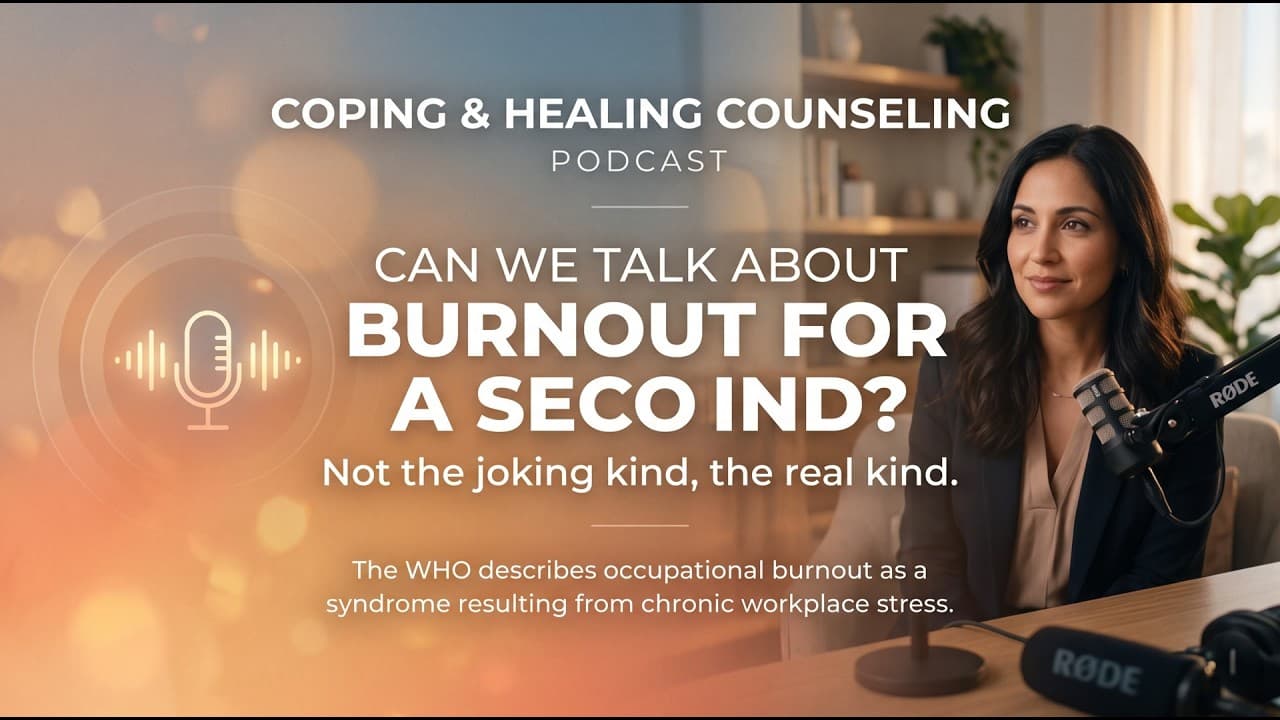
Why a Vacation Doesn't Fix Burnout | Georgia Telehealth Therapy
Can we talk about burnout for a second? Not the joking kind, the real kind.
If this resonated, we have therapists who can help.
15+ licensed therapists, all 159 Georgia counties, telehealth-only. Medicaid covered at $0 copay.
Book a free consultation