
Accessible Mental Health Care Across Georgia | CHC Podcast
In this episode
In this episode, we bust 3 common therapy myths, talk about why showing up for yourself matters — especially at the end of a hard week — and explore how Coping & Healing Counseling makes telehealth therapy accessible across all 159 Georgia counties.
Medicaid = $0 | Insurance accepted | 15+ licensed therapists
(404) 832-0102 | chctherapy.com
Transcript
You know, it's funny. If you break your arm, um, you go to the doctor, they take an X-ray, and there's this very clear, jagged white line, right? The doctor points right at it, they put a cast on it, and it's fixed. It's a highly satisfying, completely objective process. Yeah. You can actually see the problem. Exactly. But everyday exhaustion, like the kind that just sort of slowly hollows you out by a Friday afternoon. Oh, yeah. There is no X-ray for that. We are looking at this internal landscape that is just incredibly murky, right? And it's so easy to ignore. It really is. And so, welcome to today's deep dive. We are looking at some really fascinating
material today. A wellness brief put out by a Georgia- based teleaalth practice called Coping and Healing Counseling or CHC. Yeah. Their Friday wellness edition. Right. And the whole mission of this deep dive today is to unpack this brief because it essentially forces us to look at why we actively ignore our own internal warning lights. It actually starts by acknowledging something very simple but honestly kind of confronting. It just acknowledges that you, the listener, made it through another week, which is no small thing, right? I mean, a week that likely demanded just a massive amount of cognitive and emotional output from you. Yeah. You showed up for your family, you showed up for your job, your,
you know, your endless list of obligations. And the overarching premise of this material from CHC is a pivot. Oh, they are essentially challenging you to actually show up for yourself for once, which sounds so simple, but it's really not. Not at all. The text hinges on this single concept. They say, um, one call, one click, one decision that could change the way the next chapter feels. I love that phrasing, but let's be real and look at that reluctance for a second. Why is making that one click, you know, usually the heaviest lift of the entire week? Oh, absolutely. because it feels like we treat our mental bandwidth the way I mean the way a civil
engineer might look at a bridge that is just constantly carrying maximum load. That's a great way to put it, right? We just keep driving these heavy trucks over it assuming that well because the concrete hasn't physically collapsed into the river yet. It doesn't need any maintenance, right? We're just perpetually existing in a state of structural fatigue. Yeah. It's like keeping your phone plugged in just enough to keep it from dying on your morning commute. Yeah. But never actually letting it sit and get a full charge. Oh, that is so true. And what's really fascinating here is um the psychology of exhaustion in our culture right now. How so? Well, we've essentially managed to rebrand chronic
burnout as a marker of reliability. Oof. Wow. Right. So, taking an hour to do cognitive maintenance, which is essentially what therapy is. It feels like stepping out of line. It feels indulgent to people. Like a luxury. Exactly. Like a spa day instead of, you know, healthcare. We hesitate because society has essentially trained us to wait for that bridge to actually fracture before we even think about calling in an inspector. Okay, let's unpack this because if we are conditioned to wait for the structural collapse that directly feeds into the mental roadblocks that CHC highlights in this brief, the therapy myths, right, the invisible barriers, the source specifically targets this really pervasive idea. Yeah, this is myth
number one that therapy is strictly a rescue operation for catastrophic problems, right? That you have to be in absolute crisis. Yeah. And they counter this by emphasizing that the work is actually about, you know, personal growth, everyday stress and just building better coping skills. Well, think about the mechanics of how stress compounds in the human body. Okay? It is rarely this single catastrophic event that ruins our daily quality of life. It's the microscopic daily friction, the paper cuts. Exactly. The thousands of paper cuts. If you only view a professional as a crisis negotiator, you completely deny yourself the opportunity to learn how to, you know, lubricate the gears of your daily life. Yeah. It makes
me think we don't wait for our car's engine to literally catch fire before we get an oil change. Right. So, why on earth do we do that with our own minds? Exactly. Therapy isn't simply pulling you back from the ledge. It's optimizing your baseline so you aren't living on the ledge to begin with. Which brings up the vulnerability aspect, which is the second myth they tackle. The text notes this widespread illusion that asking for help somehow equates to weakness. Oh, that's a huge one. But really, if you think about it, gritting your teeth and just pushing through, that's just avoidance. In a lot of ways, staying silent is actually the path of least resistance. It
is. Avoidance is highly efficient in the short term. I mean, it takes zero immediate energy to just keep doing exactly what you're already doing, even if it hurts. Yeah, that's a good point. Stopping to dismantle your own protective scaffolding, that requires a massive expenditure of courage. Recognizing a dysfunctional pattern and then inviting a professional to examine it with you, that is an inherently brave act because you're opening the hood, right? It requires you to tolerate the profound discomfort of the unknown. And that is exactly why the text frames this as an act of immense strength, not weakness. Okay, so that's two myths down. But I do want to push back on the timeline aspect for
a second, which is the third myth they bring up. Okay. Yeah. Because this is where I think the friction really hits for someone who is already completely tapped out, right? The time commitment. Yeah. The brief mentions that evidence-based approaches like CBT, cognitive behavioral therapy, can yield meaningful relief and results in just 8 to 12 sessions. Mhm. Now, I know they are trying to dispel that classic movie myth that therapy takes five years of lying on a leather couch talking about your childhood, right? The 40ian stereotype. Exactly. But for someone who is running on fumes today, right now, two to three months of cognitive behavioral work, that still sounds like taking on a second job. Yeah.
How do we reframe that timeline for someone who just wants instant relief? That is a completely rational push back. I mean, if you are already overwhelmed, adding a three-month cognitive project to your Google calendar seems entirely counterintuitive, right? It's like, I don't have time for this. But we have to separate the actual structural rewiring from the immediate psychological shift. Okay, tell me more about that. The text is very deliberate in promising meaningful relief after just a few sessions. But how does that happen mechanically? I mean, is it just the placebo effect of making an appointment? You feel like you did something, so you feel better? Well, no. It's actually far more structural than a placebo
effect. Okay. The exact moment you make that appointment, you are no longer the sole custodian of your distress. Oh, wow. I like that. Yeah. You've essentially outsourced a portion of the psychological burden to an expert and that creates this immediate pressure release valve in your nervous system. Just knowing help is on the calendar. Exactly. the 8 to 12 sessions of CBT, you know, the process of actively identifying cognitive distortions and replacing them with functional neural pathways. Yes, that takes time, right? But the relief of knowing you aren't carrying the scaffolding completely alone anymore. That happens almost instantaneously. You're shifting the paradigm from therapy as this desperate fix to therapy as a proactive tool. That makes
a lot of sense. So, let's assume someone listening actually overcomes that mental hurdle. They realize they don't need a total crisis to justify the appointment. They know asking is a strength and they accept that the relief starts quickly. Immediately they're going to hit the second wall, the logistics, the calendar and the map. The practical reality. Yes. And this is where CHC's specific model becomes a really compelling case study in accessibility. They are operating a secure HPA compliant teleaalth model across all 159 counties in Georgia which is massive. It's huge. Here's where it gets really interesting because to cover all 159 counties, I mean, what does that actually look like in practice? Well, to truly grasp
the impact of that scale, we have to look at the geographical distribution of mental health professionals in general. Okay. In a state as expansive as Georgia, specialized care clusters heavily around urban centers like Atlanta, right? Of course, if you live in a rural county, the friction of simply getting to a clinical office, I mean, the drive time, paying for gas, the hours you have to take away from work, that alone is enough to kill the momentum of that one click entirely. It's just too much friction. Yeah. Especially when you factor in their scheduling, the brief explicitly highlights that they have evening and weekend availability, right, which changes the game. They are essentially stripping away the
most formidable logistical excuses. But and I do have a serious question about the clinical specifics here. Sure. Tellahalth sounds super convenient for talking through you know anxiety or life transitions. But the text outlines a really wide scope of practice. They mention a team of 15 plus therapists treating adults, teens, kids, couples, and they explicitly highlight trauma-informed care in EMDR. Yes. Now, can you actually process deep trauma safely over a video call? Like, can a virtual model handle that level of intensive therapy? It's a great question, and it's one that clinical directors grapple with constantly. But if we look right at the text, the explicit inclusion of virtual EMDR proves that accessibility no longer means compromising
on specialized treatments. But mechanically, how does that work on a screen? So mechanically, EMDR relies on bilateral stimulation, right? Which is usually eye movements tracking side to side or sometimes alternating auditory tones. And the goal is to essentially unstick traumatic memories so they can be processed without the overwhelming emotional charge. It sounds a little bit like like defragmenting a computer's hard drive. Oh, I like that. like you're moving a traumatic memory out of the active RAM where it's constantly causing the system to lag and freeze up and you're putting it into long-term storage where it actually belongs. That is a phenomenal way to visualize the mechanism. Yeah. Okay. But virtually, right? So, historically clinicians assumed
you absolutely needed to be in the same physical room to facilitate that defragmentation. Yeah. That's what you see in the movies. But what we found is that the software enabling clinical teleahalth today has evolved so much. It allows for extremely precise visual or auditory bilateral stimulation right there on the patient's screen. Oh wow. I had no idea the software could do that. It can. But honestly, beyond the technology itself, there is a profound psychological advantage to doing this virtually because you're in your own house. Exactly. Because trauma work requires the nervous system to feel a baseline level of safety to even open those files. Right. Doing this intensive unearthing while sitting on your own couch,
you know, wrapped in your own blanket, it often provides a level of grounding that a sterile clinical office simply cannot match. That makes incredible sense. You're diving into the deep end, but you're doing it in a pool you already trust. Beautifully said. It can actually accelerate the therapeutic process because the patient doesn't have to spend the first 20 minutes of the session just, you know, acclimating to a foreign environment. The waiting room anxiety. Yes, exactly. And speaking of trust, the brief also emphasizes cultural competency across diverse communities, which feels particularly critical when you are beaming into living rooms across 159 very different counties in Georgia. Yeah. Finding a therapist who truly understands your specific background
via teleaalth is a total gamecher. It is. Cultural competency is often thrown around as a corporate buzzword, but clinically it's the difference between a stalled engine and a breakthrough. How so? Well, if you have to spend half of your session explaining the basic nuances of your cultural background or your family's specific immigrant experience or just your community's unique pressures, you're just wasting time. You're wasting vital therapeutic energy. With a diverse team of 15 plus therapists, the probability of finding a provider who inherently understands your lived experience skyrockets. Right? That shared baseline is a massive accelerator for trust. Okay, so we've cleared the mental hurdles. We've cleared the map, the calendar, and the cultural disconnect. But
there is a massive elephant in the room that stops almost everyone in their tracks. The final hurdle. The final hurdle. Having a culturally competent therapist available for a virtual EMDR session on a Saturday evening means absolutely nothing if the patient cannot afford it. Yep. Financial access is the ultimate bottleneck in modern healthcare. Always. You can build the most elegant teleaalth infrastructure in the world, but if it sits behind an insurmountable payw wall, it is virtually useless to the people who need it most. And this is where this CHC material genuinely surprised me because a lot of specialized private practices, they operate strictly out of network. Oh, yeah. They're cash only, relying on patients who can
just float hundreds of dollars a week until they hit a deductible. Right. But CHC seems to have engineered their model specifically to demolish this financial barrier. They accept major commercial insurance plans, the Texas, BCBS, Sigma, Etna, United Healthcare, Humanana. Covering the commercial plans is sort of the baseline for a modern practice. What is truly radical is how they address the margins, right? Because for Medicaid plans in Georgia, specifically Peach State, Care Source, and Group, the brief says the co-pay is 0. Zero. How does a private practice sustain that economically? It's so rare to see a private practice aggressively target financial barriers like that. It is rare. And if we connect this to the bigger picture,
offering a 0 co-pay for Medicaid in a private practice setting, it is a profound statement about health equity. Yeah. Medicaid serves some of the most vulnerable, systemically stressed populations. And historically, the private therapy sector has been largely walled off from this demographic because of the administrative red tape. Exactly. The administrative friction is huge. So by navigating that friction required to accept these plans and then offering specialized care for literally zero out-ofpocket dollars, CHC is proving that their commitment to access is structural. It's not just rhetorical, right? It completely changes the calculus for a potential patient. The weight of the week doesn't have to be compounded by the stress of checking your bank account before you
make the call. And even if you fall into that really frustrating middle ground like you don't have commercial insurance but you also don't qualify for Medicaid. The brief explicitly notes they offer a sliding scale which is so important. It all traces back to their core mission statement which they state clearly everyone deserves quality care regardless of location, income or background. Yeah, they have systematically dismantled the architecture of avoidance. That's a great phrase, right? By combining statewide teleaalth, evening hours, commercial insurance acceptance, a sliding scale, and a Z- dollar Medicaid option, they've remove the friction at every single touch point. When location, time, and money are no longer these insurmountable walls, showing up for yourself actually
becomes a tangible reality. So, what does this all mean? For anyone listening who is feeling that friction, who recognizes they've been running their engine hot for way too long, the actionable step here is incredibly straightforward. It really is. the barriers are gone. You can literally just reach out to coping and healing counseling. Their number is 404-8320102 or you can just go to cheat theapy.com. You know, the really big insight of this entire deep dive is that the primary barriers to mental health care are no longer geographical or financial. Right? The final frontier of therapy access is honestly just dismantling our own culturally ingrained glorification of exhaustion. CHC is simply the case study proving that the
logistical hurdles have been cleared. It really reframes the whole conversation for me. Therapy isn't a sign of weakness and it isn't an endless excavation of the past. It is an accessible, highly practical tool for cognitive maintenance. And models like coping and healing counseling are proving that highquality specialized care can reach you exactly where you are whenever you need it, completely irrespective of your tax bracket. Which brings us to the final necessary challenge embedded right in their closing message. Oh, I love this part. They say, "Your story is not over. The next part can be different." And so, I'd pose this to the listener. If the logistical barriers are truly dismantled, if you cannot blame your
zip code or your work schedule or your bank account or the myth that you have to be completely broken to go, what is the real reason you might be postponing writing that next chapter? Wow. Are we sometimes simply more comfortable in our familiar exhaustion than we are in doing the vulnerable work required to actually feel better? Man, that is the ultimate question to sit with. Are we just comfortable being tired? Exactly. Well, thank you for taking this deep dive with us. We really hope you take a moment this week to prioritize your own structural maintenance and realize you do have the power to make that one decision. We'll catch you next time.
More episodes
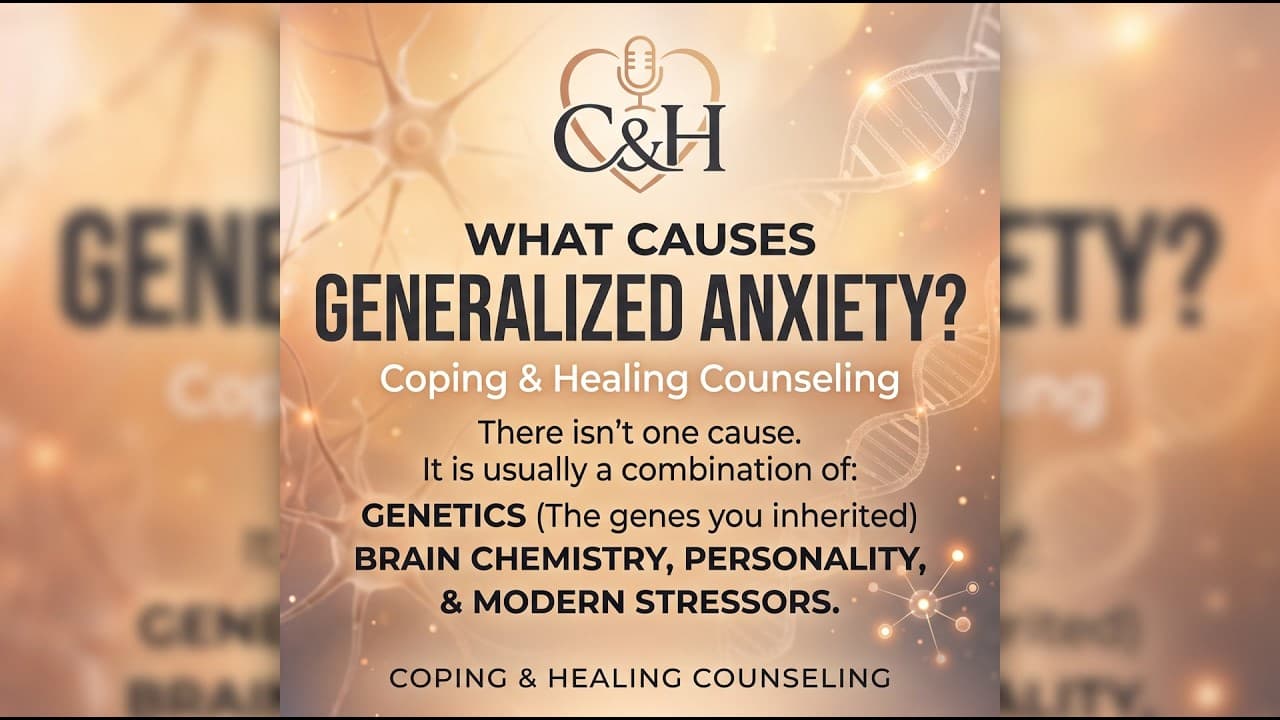
What causes generalized anxiety? — Full Episode | Georgia Telehealth Therapy
What causes generalized anxiety?
What are the 5 symptoms of major depressive disorder? — Full Episode | Georgia Telehealth Therapy
What are the 5 symptoms of major depressive disorder?

RSD and ADHD: Why One Short Text Can Wreck Your Whole Day | Georgia Telehealth Therapy
This one is for the friend who apologizes three times in a single text.
If this resonated, we have therapists who can help.
15+ licensed therapists, all 159 Georgia counties, telehealth-only. Medicaid covered at $0 copay.
Book a free consultation